ui/ux design — 2026
DEPOP REBRAND
solo ui/ux + brand designer
timeline
14 weeks
deliverables
user flows, wireframes, design system, visual design, brand identity, prototype, iconography
introduction
Depop built its reputation on creativity and community — but the app stopped reflecting that. The social layer eroded, the interface became generic, and a generation that uses fashion to build identity was left with nothing but a feed and a checkout button. This rebrand reintroduces self-expression as a core feature, centered around a collage tool that transforms secondhand shopping from a transaction into a creative act.
problem
Depop positions itself as a creative, culture-first platform — but the app tells a different story. There are no tools for self-expression, the social layer has eroded, and a generic feed-heavy interface leaves users with nothing to do but scroll and buy. For a generation that uses fashion to build identity, that disconnect between brand promise and product reality is impossible to ignore.
the goal
How might we redesign Depop so that buying secondhand feels less like a transaction and more like an act of self-expression — giving Gen Z the creative tools to build, explore, and share a personal style that is entirely their own?
solution
The rebrand repositions Depop as a creative tool for identity-building, not just a marketplace.
Instead of users having nowhere to channel their creativity, the rebrand gives them:
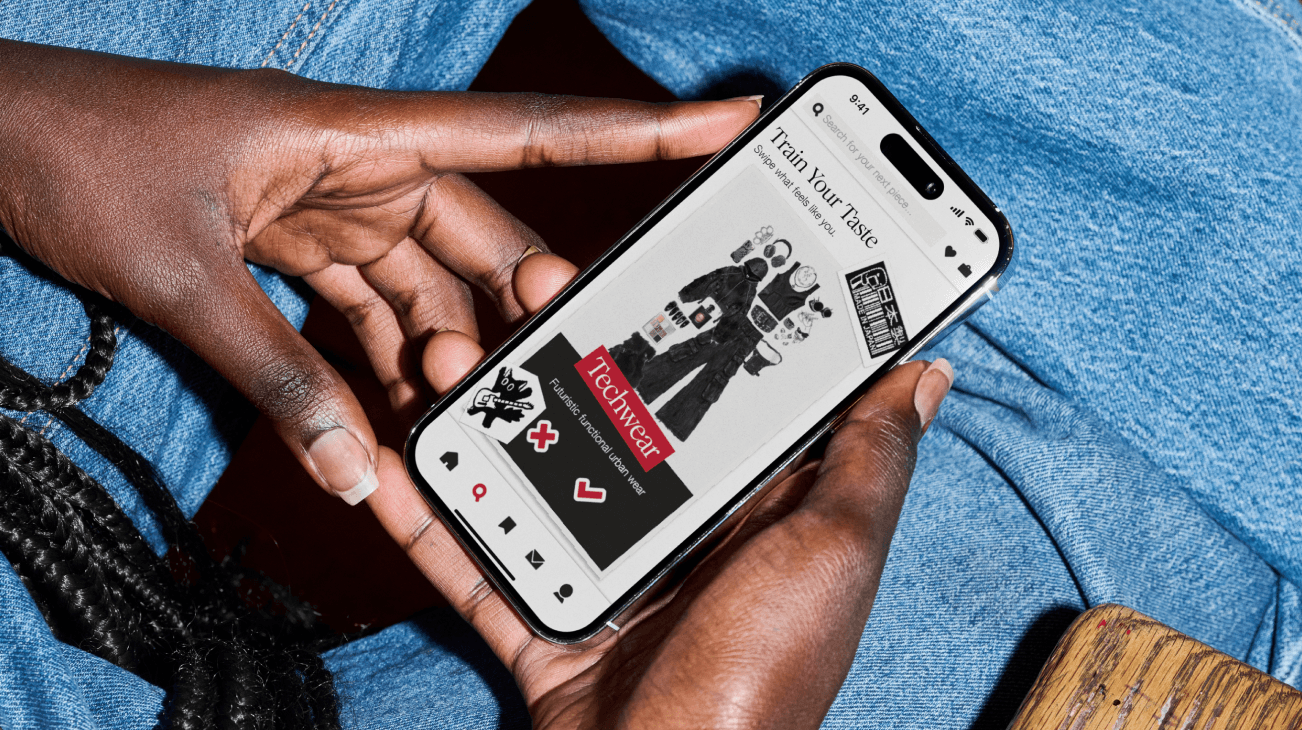
A collage canvas to assemble outfits from individual thrifted pieces
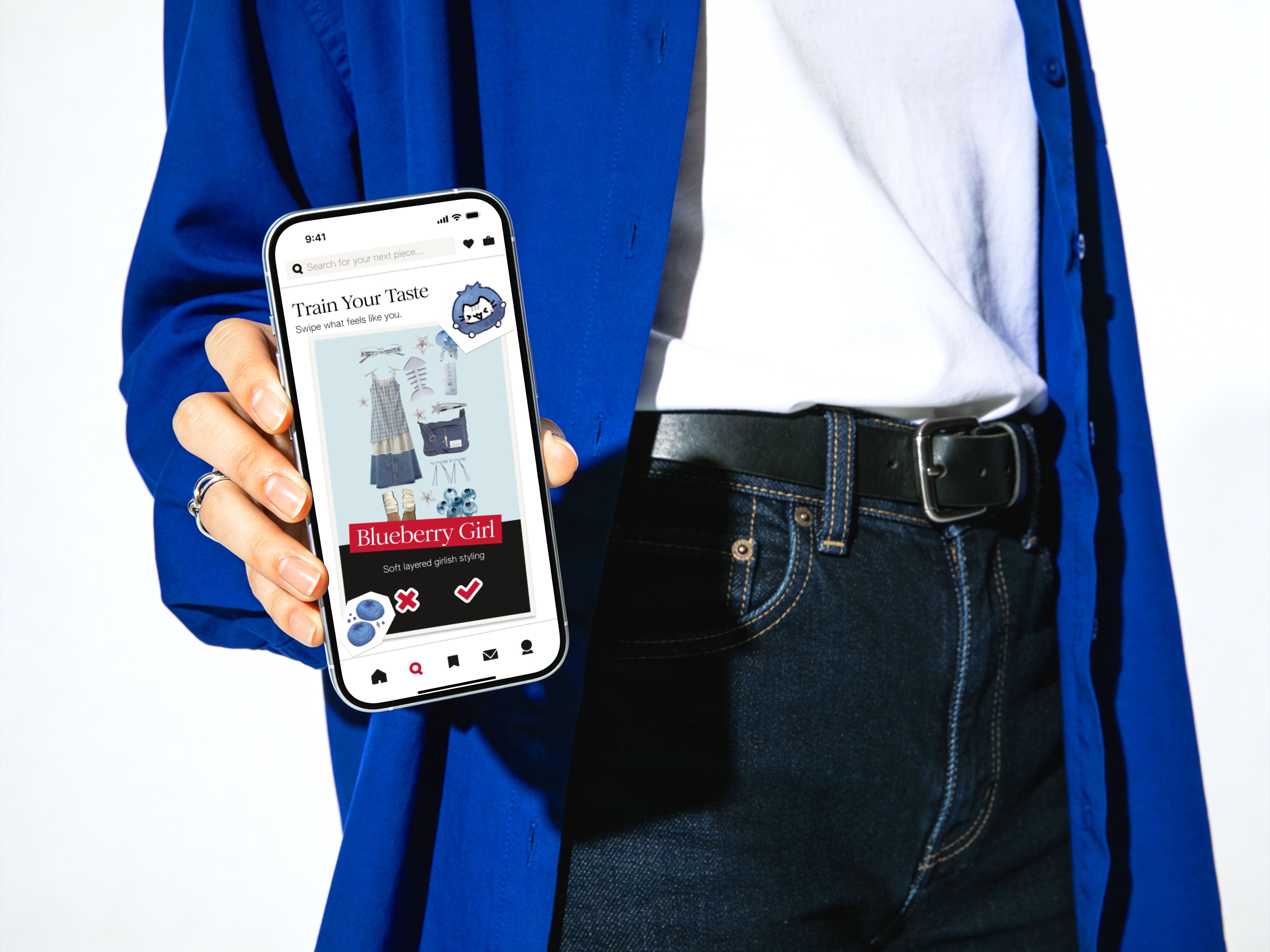
A dedicated Discover page to explore aesthetics and find their personal style
A social posting flow to share completed looks with the community
A design system that feels as expressive and culture-first as the brand itself
The experience transforms secondhand shopping from a transaction into an act of self-expression — making creativity the core feature, not an afterthought.
research
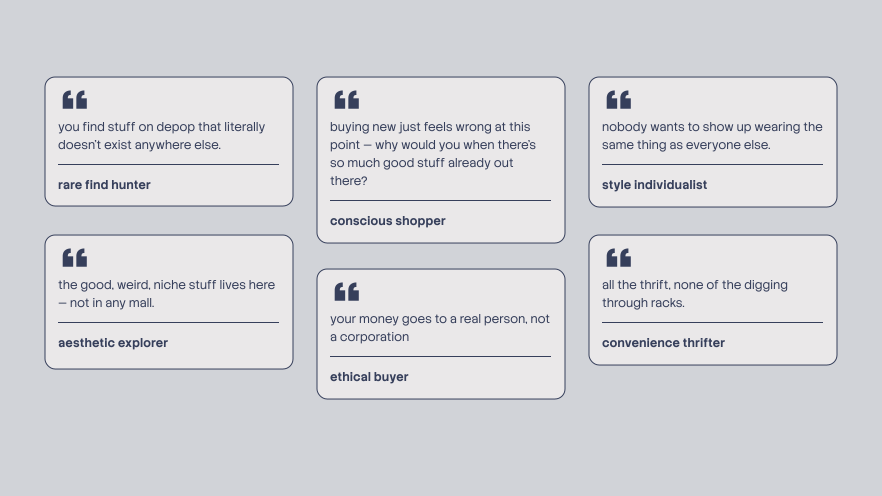
I conducted consumer research through Reddit communities, user reviews, and competitive analysis to understand why Depop users love the platform — and where it lets them down.
Key insights that shaped the rebrand and product:
These insights revealed a clear opportunity: Depop doesn't need more features — it needs its product to finally match its promise.


explorations
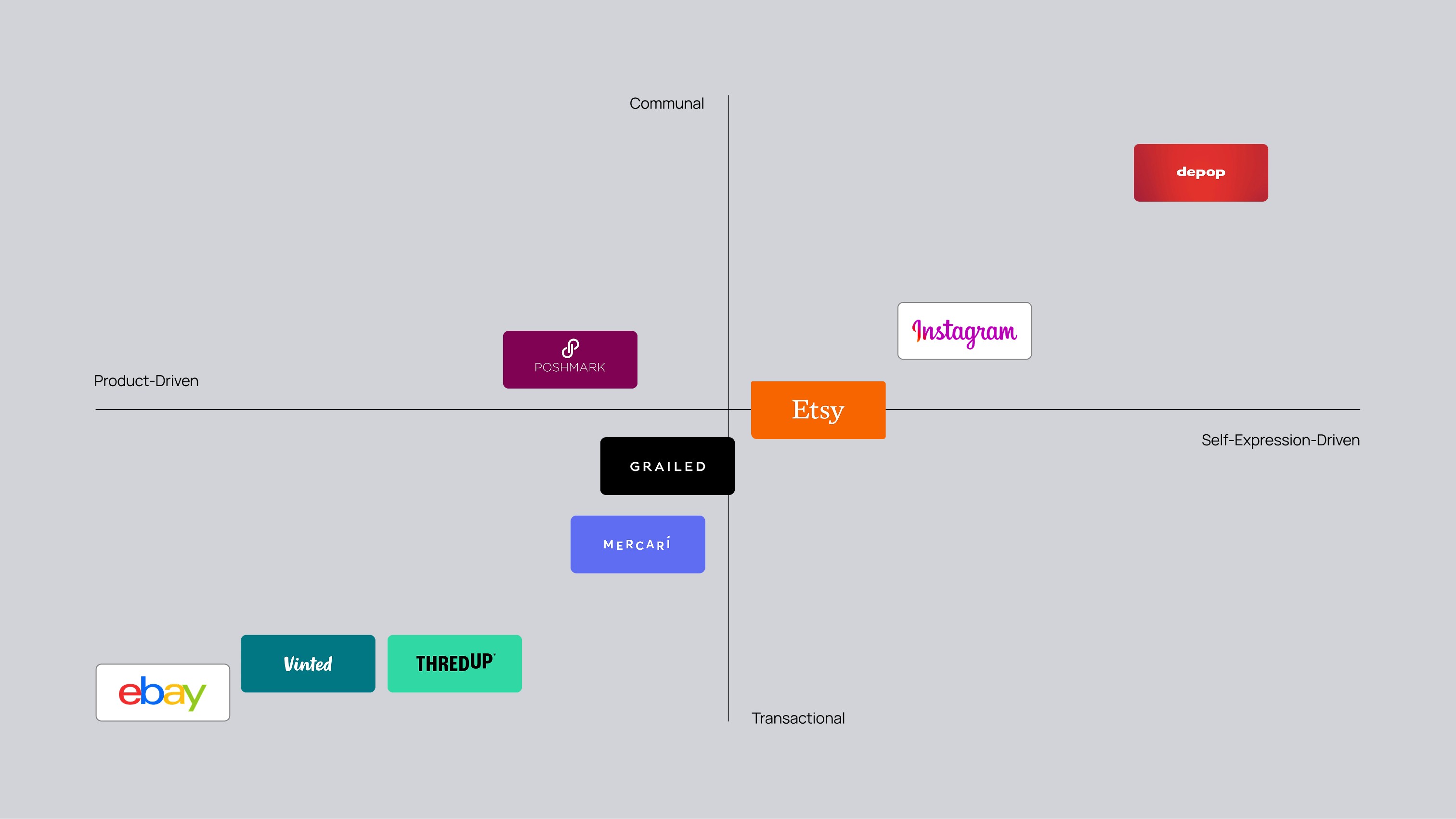
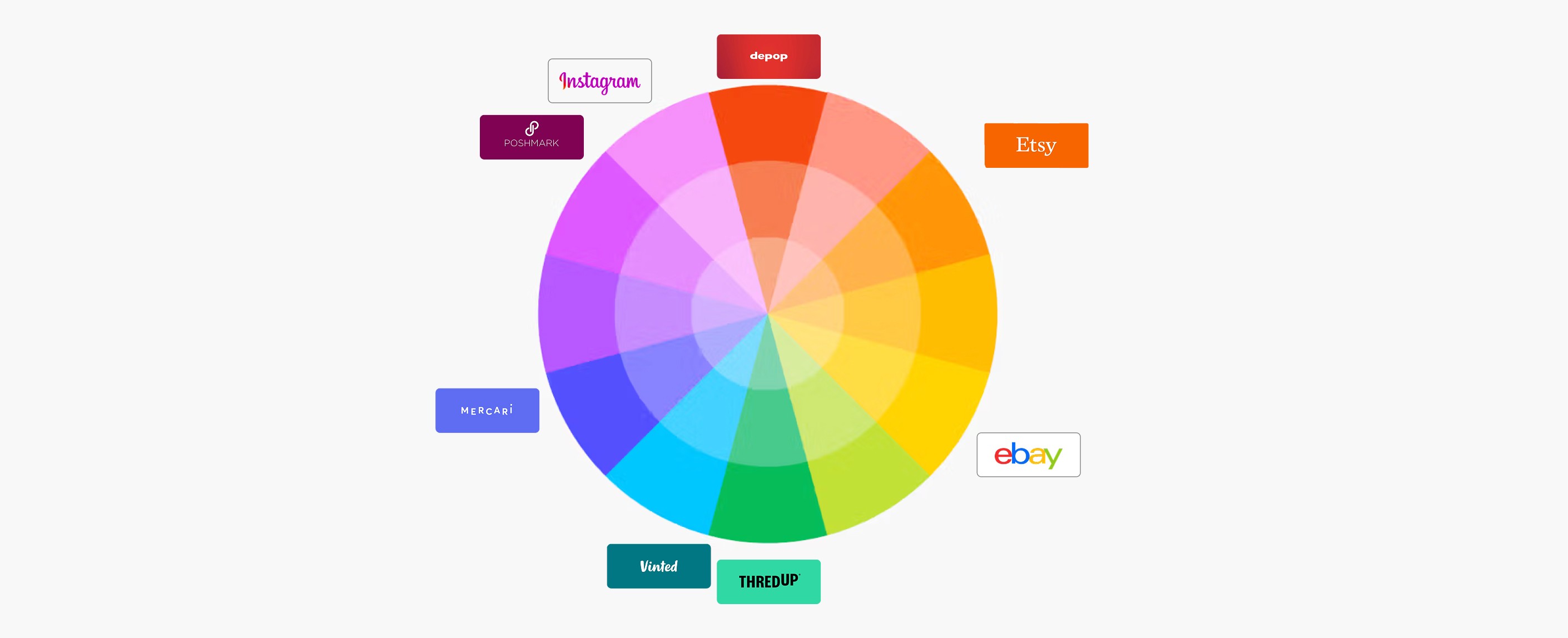
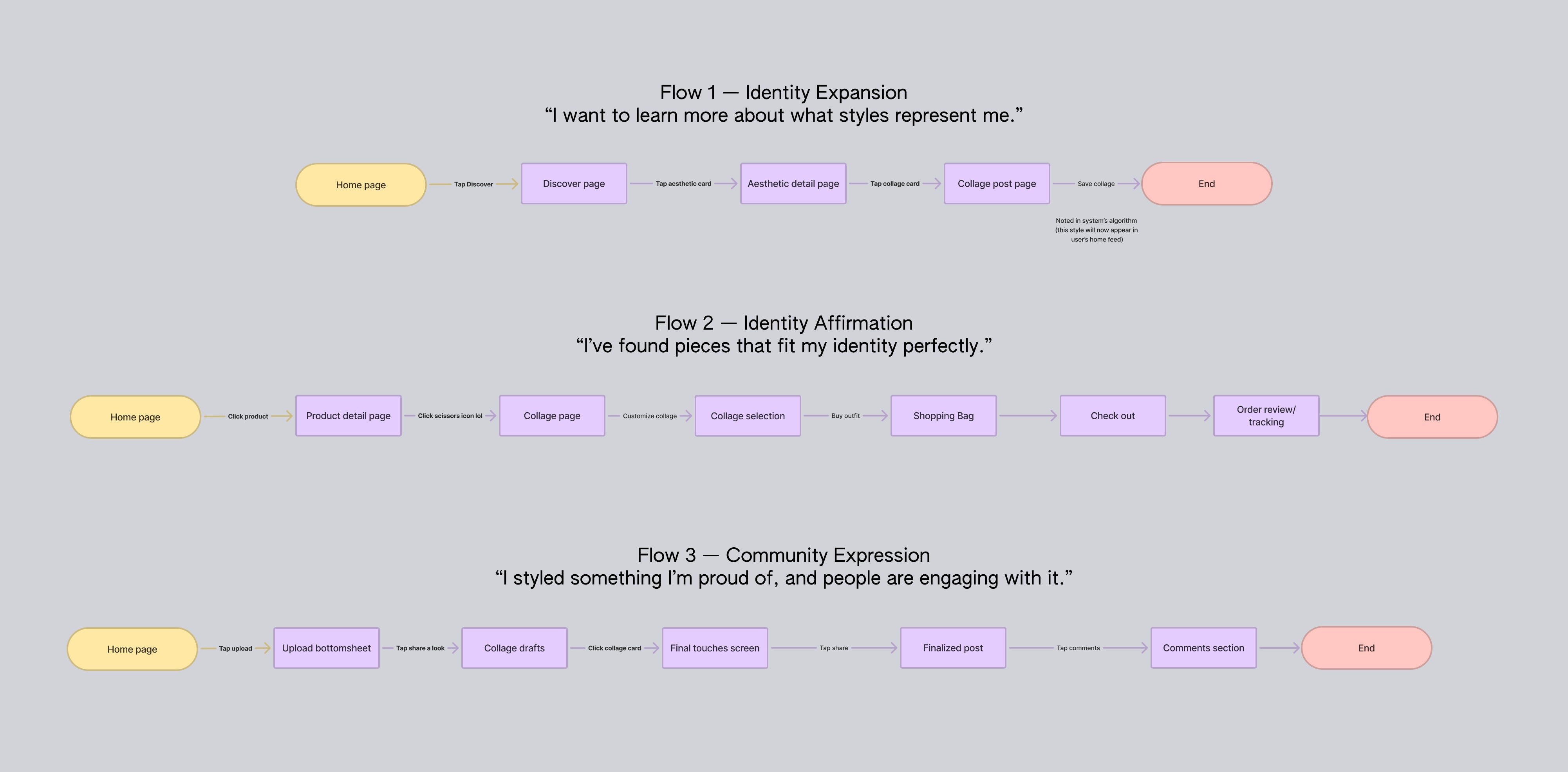
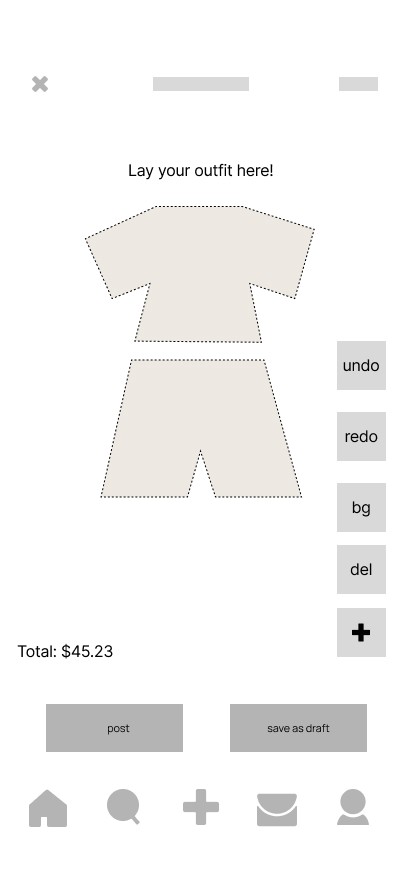
I explored the competitive landscape through a positioning matrix and color analysis before moving into early UX ideation — mapping user flows, sketching wireframes, and stress-testing feature directions against real user behavior.
Guiding questions included:
Where does Depop sit relative to competitors, and what space is uniquely its own?
What features directly address the gap between the brand promise and the product experience?
What behaviors does the rebrand need to support — and which ones does it need to retire?
Through the positioning matrix, it became clear that Depop occupies a unique space — more expressive than Grailed, more culturally relevant than Poshmark, and more identity-driven than any other resale platform. No competitor owns that quadrant. The opportunity was already there.
Early wireframes and flow mapping narrowed the rebrand to three core scenarios:
final design
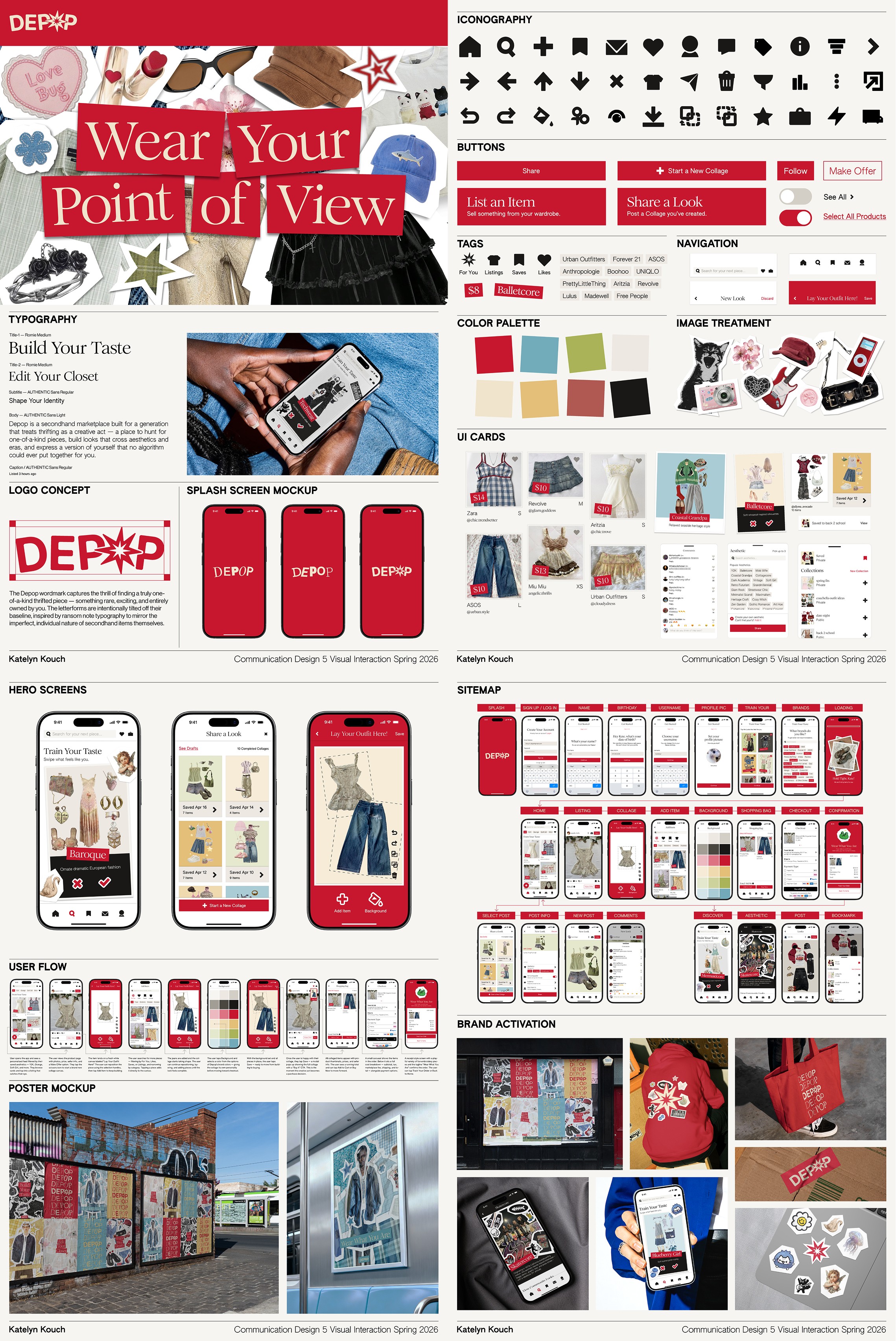
The rebranded Depop centers self-expression as a core feature — not a byproduct of browsing, but something the interface actively enables.
home feed — A personalised feed curated to the user's saved aesthetics, surfacing followed accounts alongside discovery content to restore the social layer Depop lost.
discover page — A dedicated space to explore aesthetic hubs, browse looks posted by other users, and find styles outside your existing taste — guided discovery rather than algorithmic repetition.
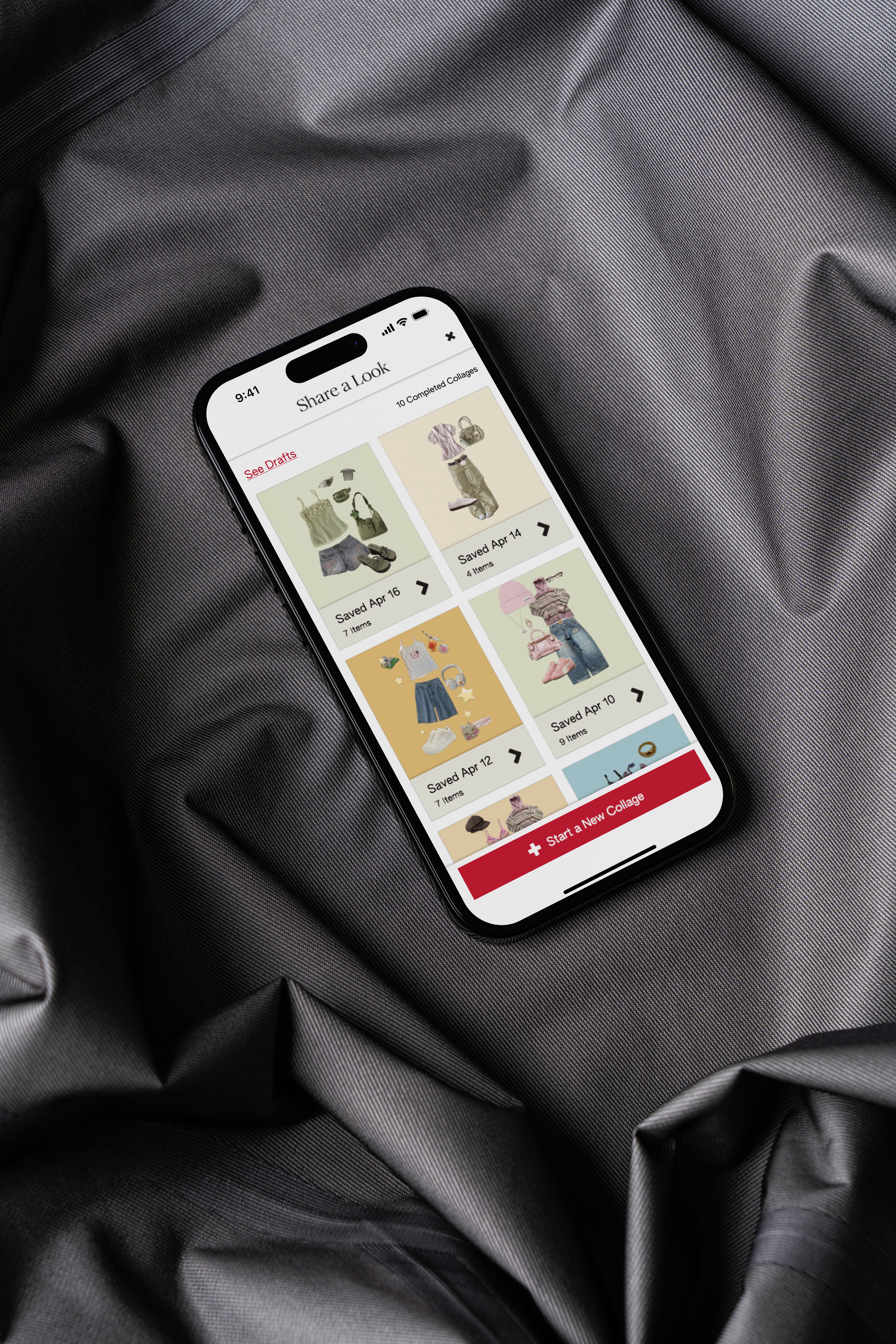
collage canvas — The heart of the rebrand. Users build outfits by layering individual thrifted pieces onto a canvas, choosing backgrounds, and assembling a look that's entirely their own before buying everything at once.
posting a look — Completed collages can be shared as identity posts — not product listings. Other users can discover them, get inspired, and shop individual pieces directly from the canvas.
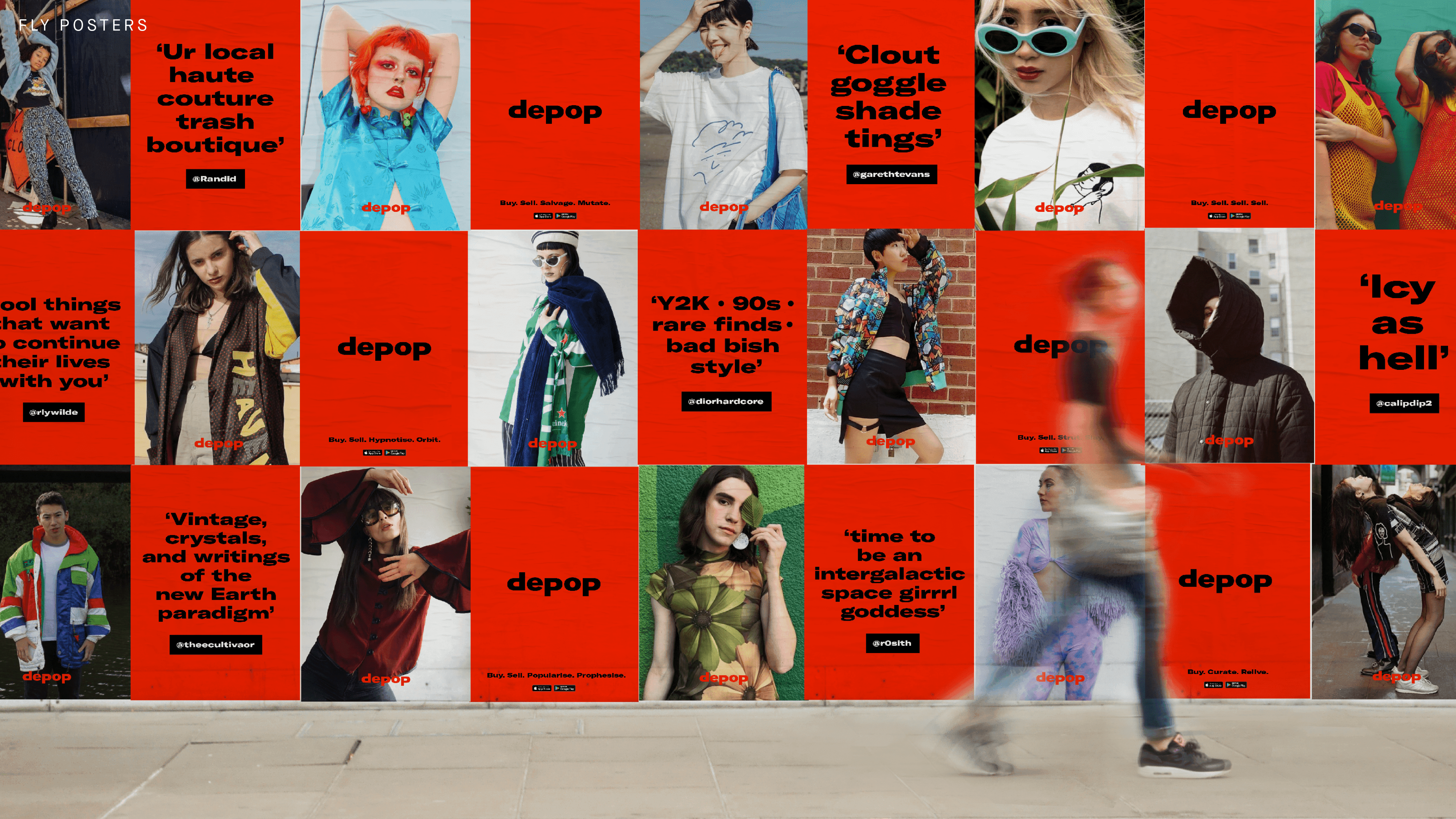
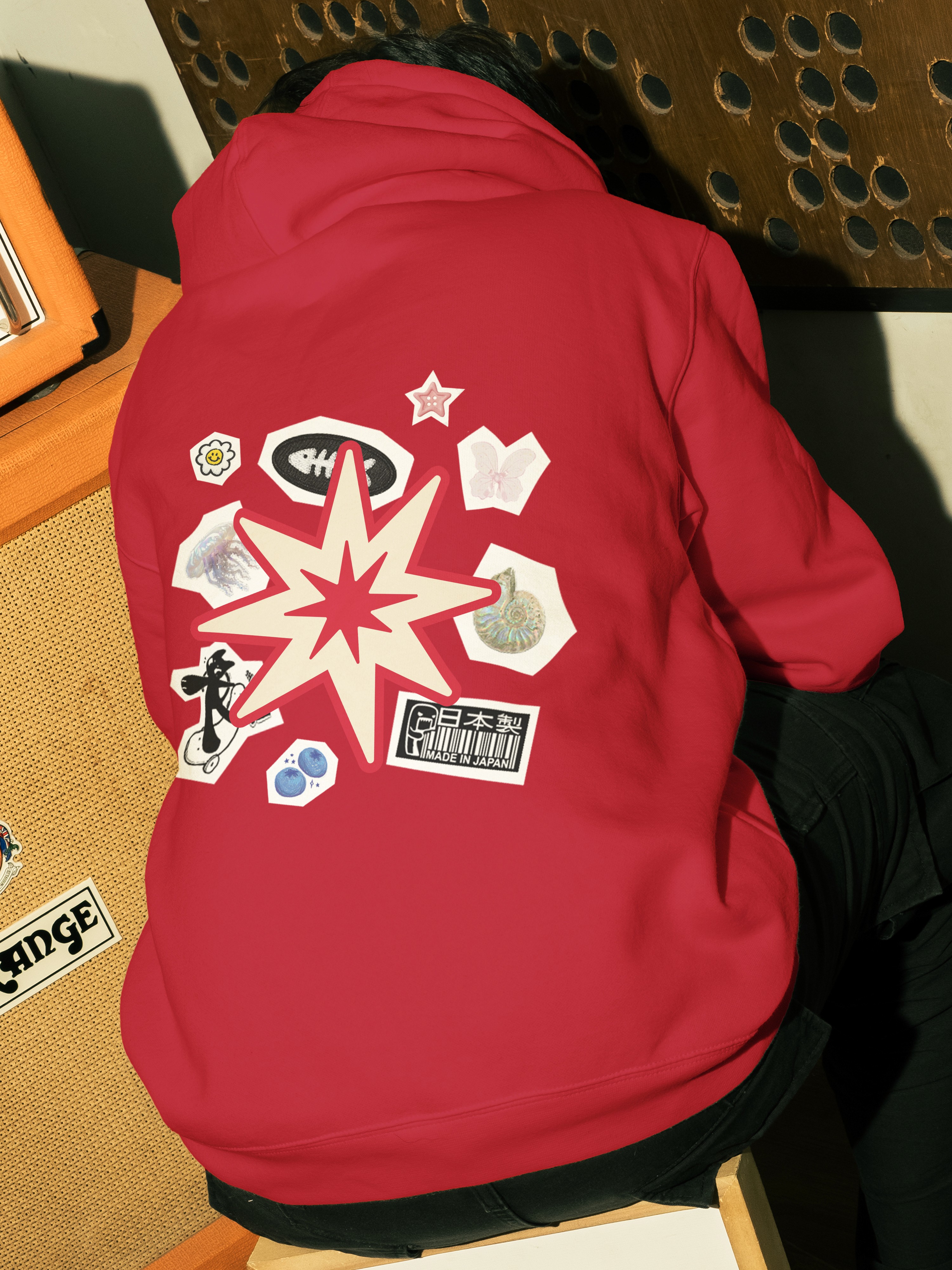
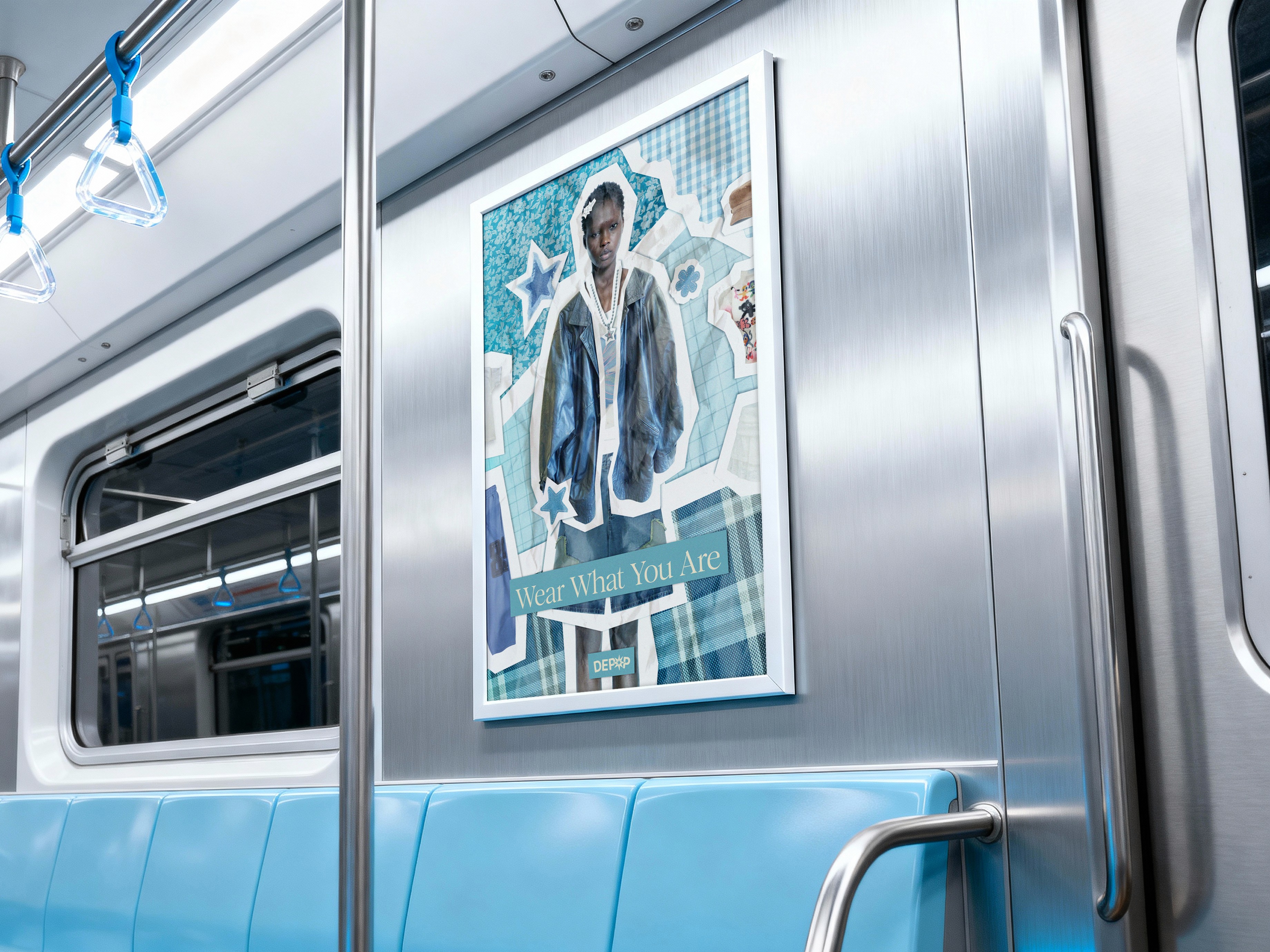
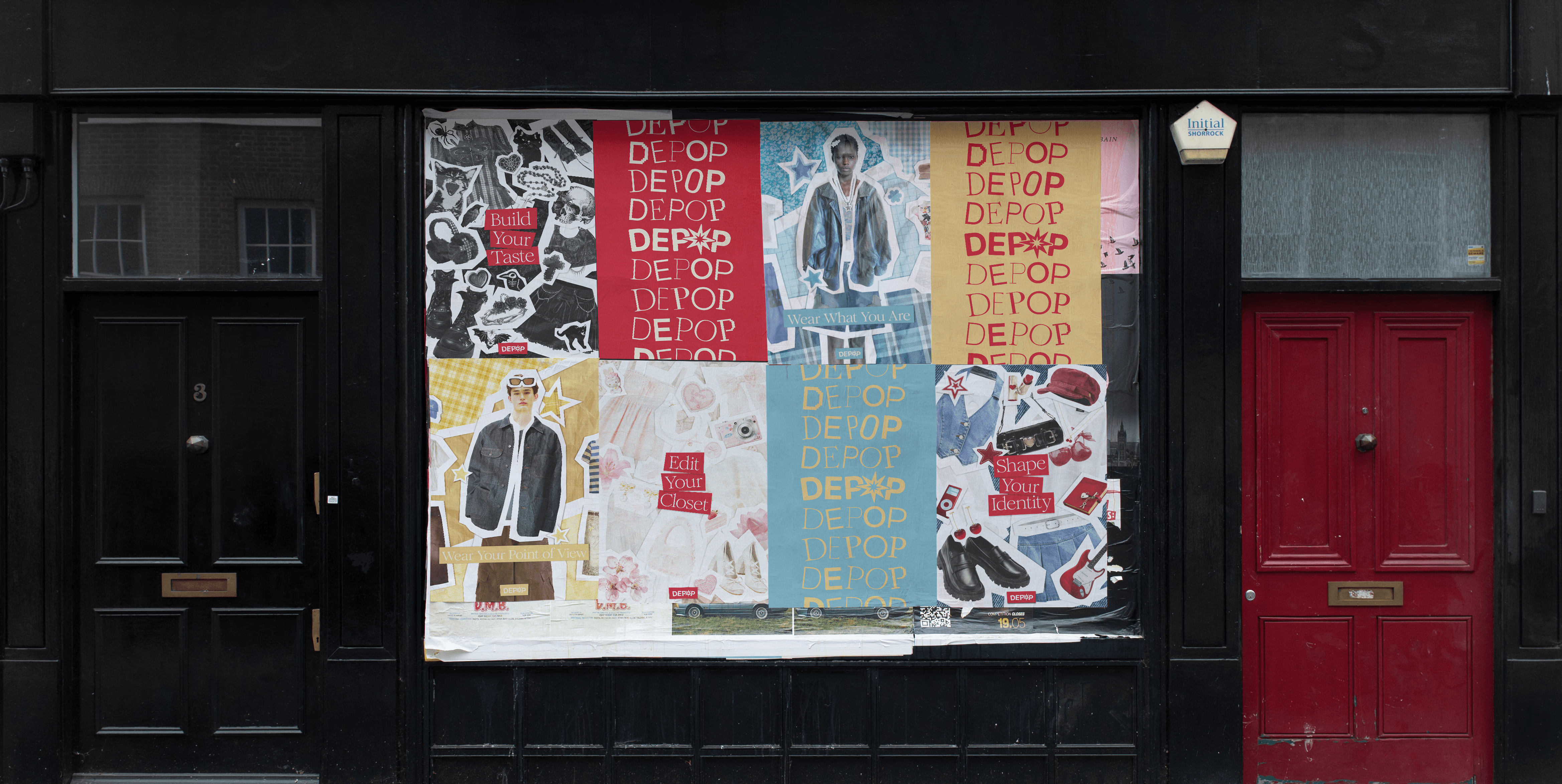
design system — A brand identity built around collage culture — expressive typography, tactile image treatment, tilted cards, and a color palette that feels lived-in rather than corporate.
Across every screen, the design uses type, color, motion, and layout to make secondhand shopping feel like a creative act — expressive and functional, exciting and trustworthy.
reflection
Rebranding Depop was my first full end-to-end UX and brand identity project — and it taught me that the hardest design problems aren't about adding features, they're about understanding what a product is actually promising and closing the gap between that promise and the experience.
1. research changes everything
Going into this project I thought I knew Depop. The research showed me I only knew the surface. Reddit threads, user complaints, and competitive analysis revealed tensions I never would have identified just by using the app — and those tensions became the entire foundation of the rebrand.
2. iteration is not failure
Every round of feedback changed something, and that was a good thing. The collage feature looked completely different in week 8 than it did in week 14. Learning to treat revision as progress rather than backtracking was one of the most valuable shifts in how I work.
3. the brand and the product have to speak the same language
The most important insight from this project wasn't a UX finding — it was realizing that a beautiful brand identity means nothing if the product doesn't back it up. Every design decision, from the collage feature to the card treatment to the type system, had to close that gap.
expression needs structure to work at scale
Depop's original chaos worked when the community was small. This project taught me that creative freedom and clear structure aren't opposites — the best expressive systems have guardrails. That's what the rebrand tried to build.
special thanks to junie jeong and micah hoang! (ㅅ´ ˘ `)