ui/ux design — 2024
raza
solo ui/ux designer
timeline
14 weeks
deliverables
research, IA, flows, wireframes, visual design, interaction design, prototype
introduction
Food connects people, but most of us only experience it on the surface — we eat without knowing the history behind each dish. Raza bridges that gap by combining education and community, turning everyday meals into cultural journeys.

problem
People are deeply curious about the origins of the dishes they eat, but there’s no simple, engaging way to learn about them. Cultural history is spread across blogs, videos, social media posts, and academic articles — a fragmented ecosystem that makes discovery feel overwhelming and inaccessible.
For everyday eaters, that means curiosity often dies the moment they have to open multiple tabs just to understand a dish.
the goal
How might we create a simple, engaging way for users to discover the cultural origins, stories, and ingredients behind dishes — while feeling as effortless and inviting as browsing a favorite food feed?
solution
Raza transforms food exploration into cultural storytelling.
Instead of users needing to resort to digging through scattered information, Raza gives them:
A visual, scrollable discovery feed of global dishes
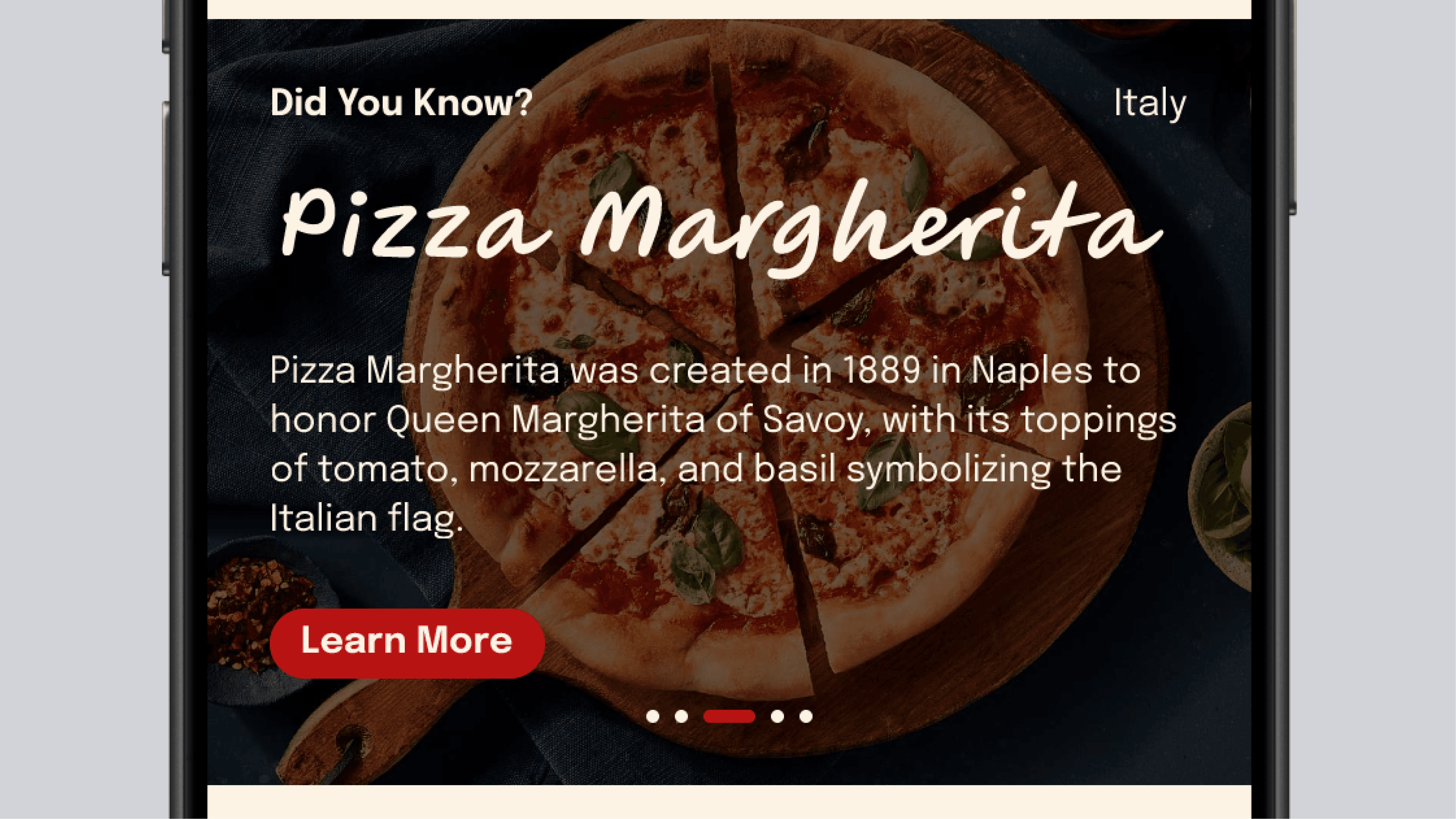
Concise origin stories designed for quick learning
Full-length cultural articles enriched with imagery and traditions
Ingredient insights with substitutions and regional context
A community space where users share recipes, memories, and personal narratives
The experience blends education with human connection — making culture feel accessible, not academic.
research
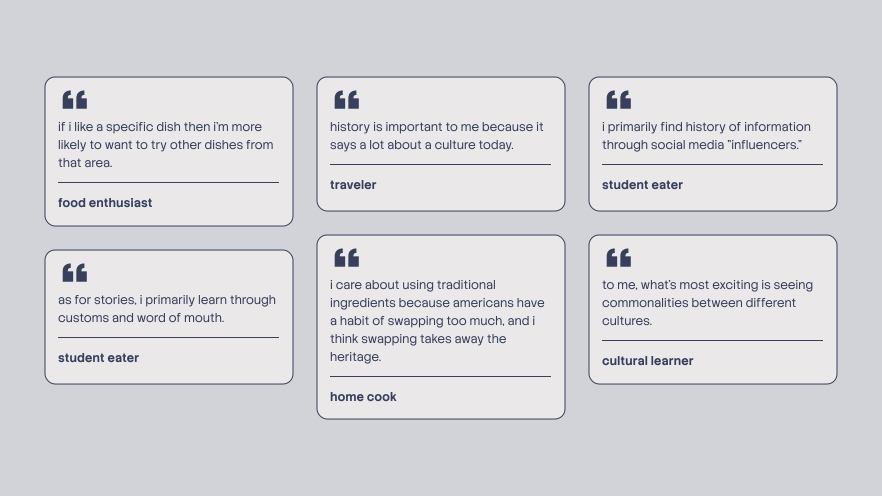
I held user discussions with food enthusiasts, travelers, home cooks, and students to validate the problem and understand the opportunity.
Key insights that shaped the product:
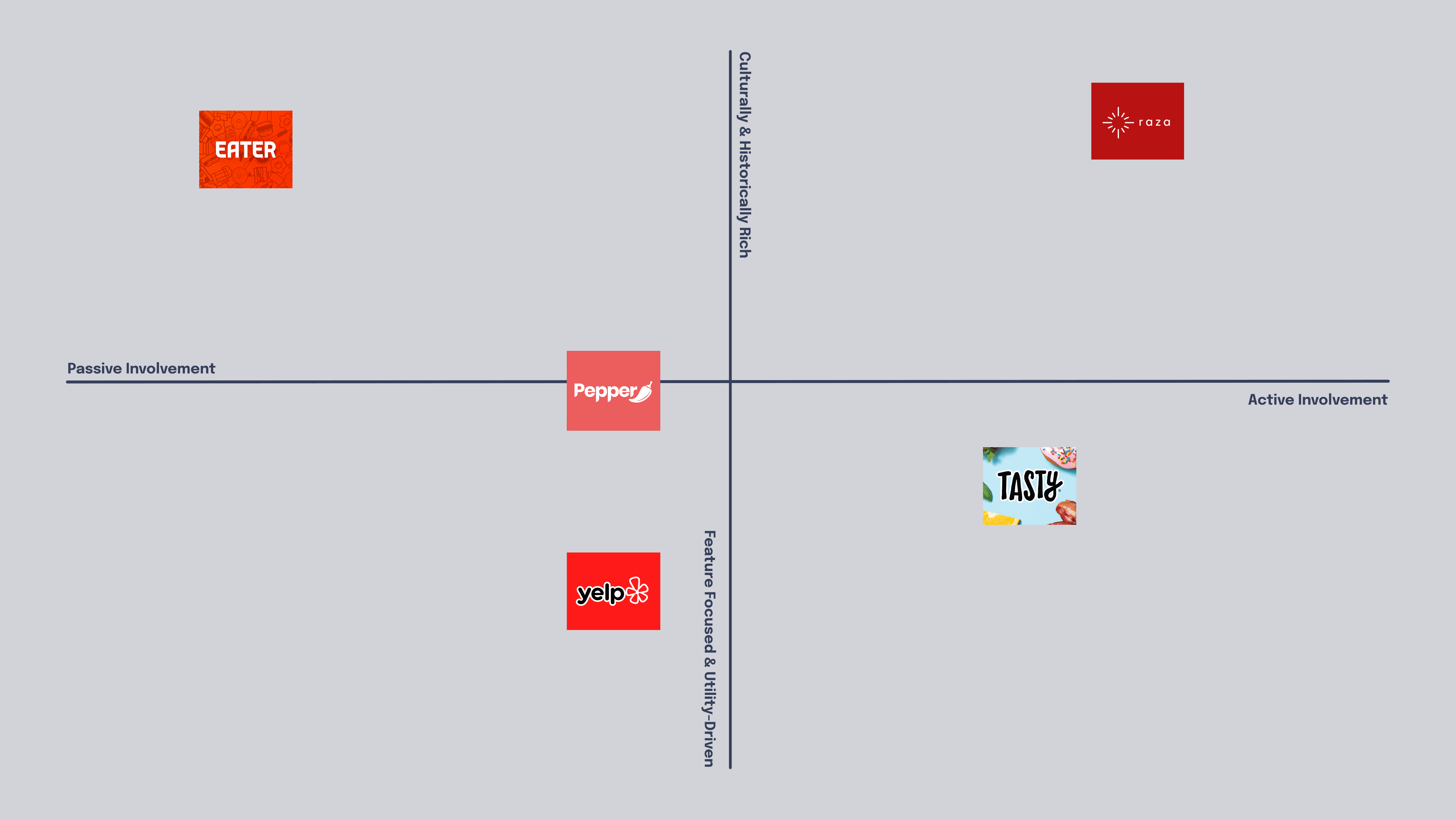
These insights revealed a clear gap: there’s no platform that makes cultural food knowledge accessible, social, and fun.
explorations
I explored a wide range of feature directions — from AR food exploration to dish scanning to cultural quizzes — before prioritizing the features that truly served the core experience.
Guiding questions included:
What helps users learn quickly?
What keeps the experience visual and lightweight?
What features align with real behavior patterns?
What supports long-term scalability?
Through sketches, user flows, and early wireframes, I narrowed the MVP to three pillars:
final design
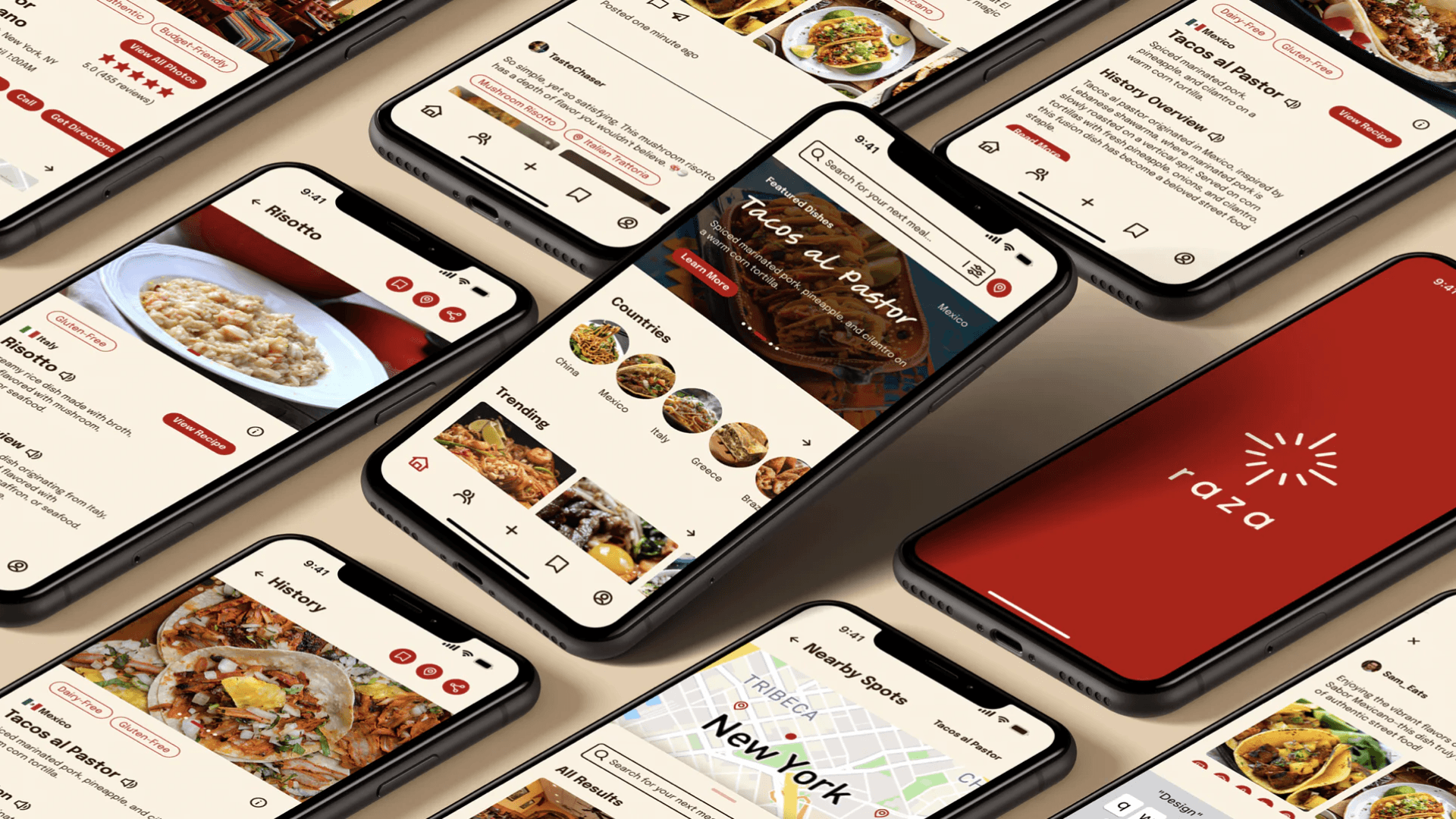
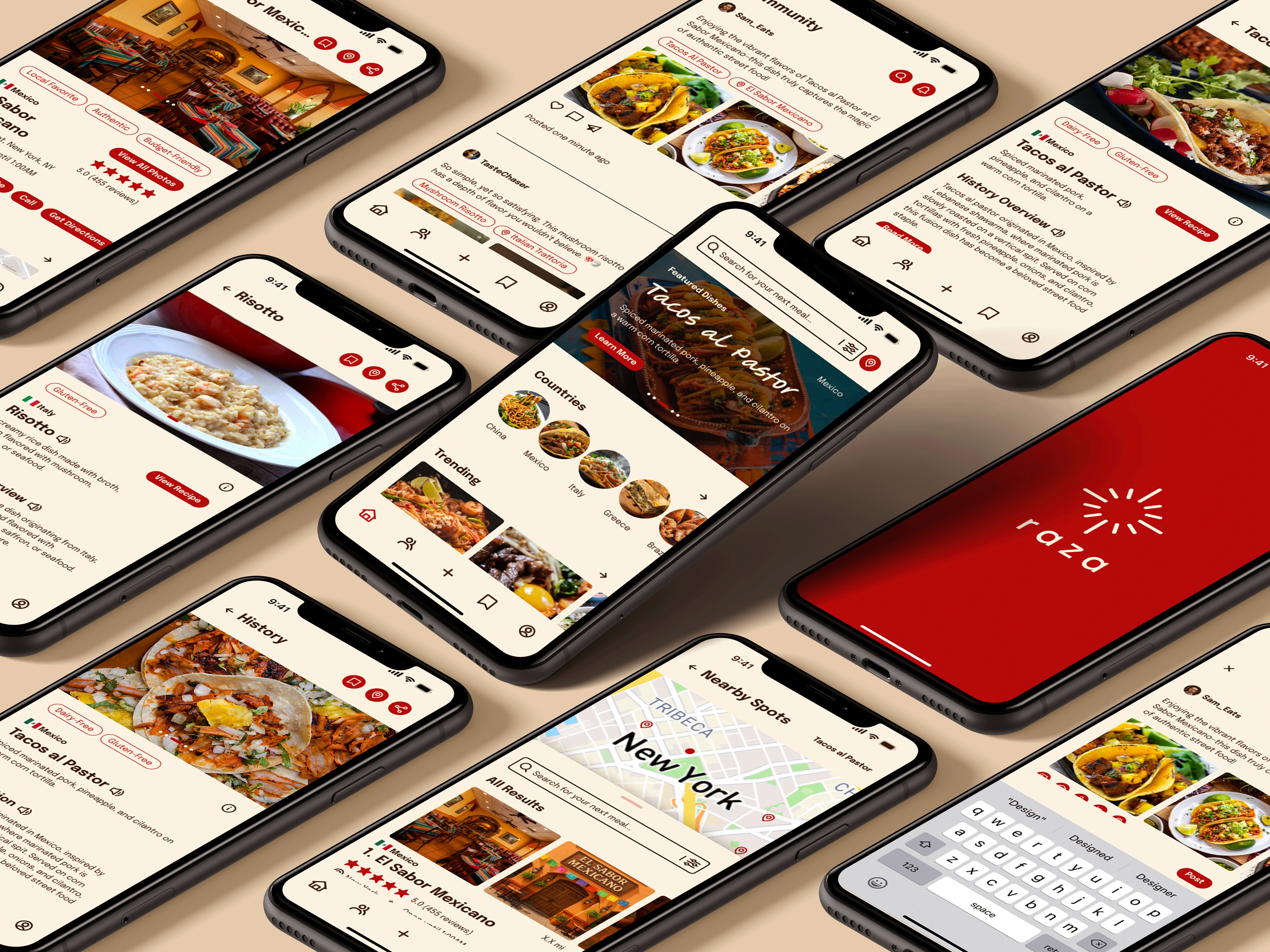
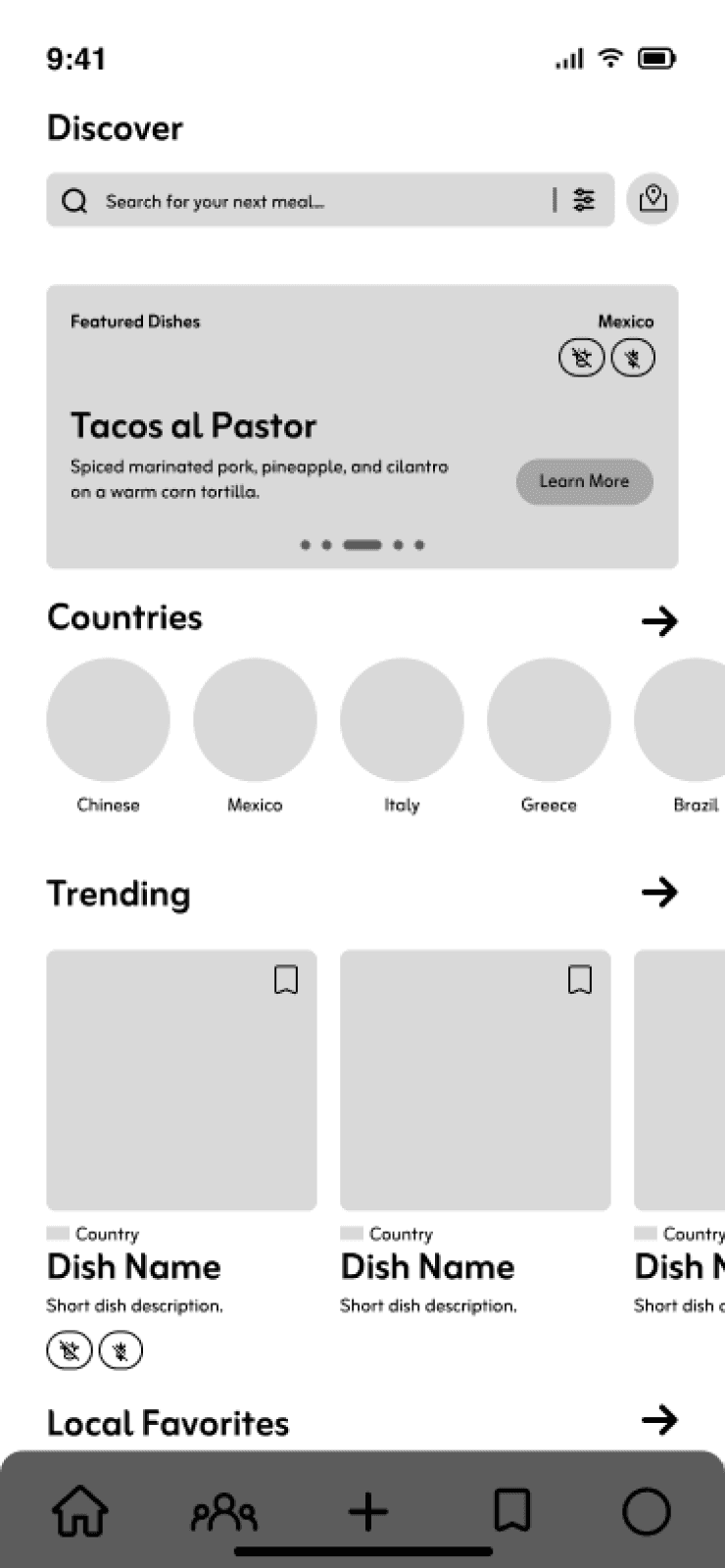
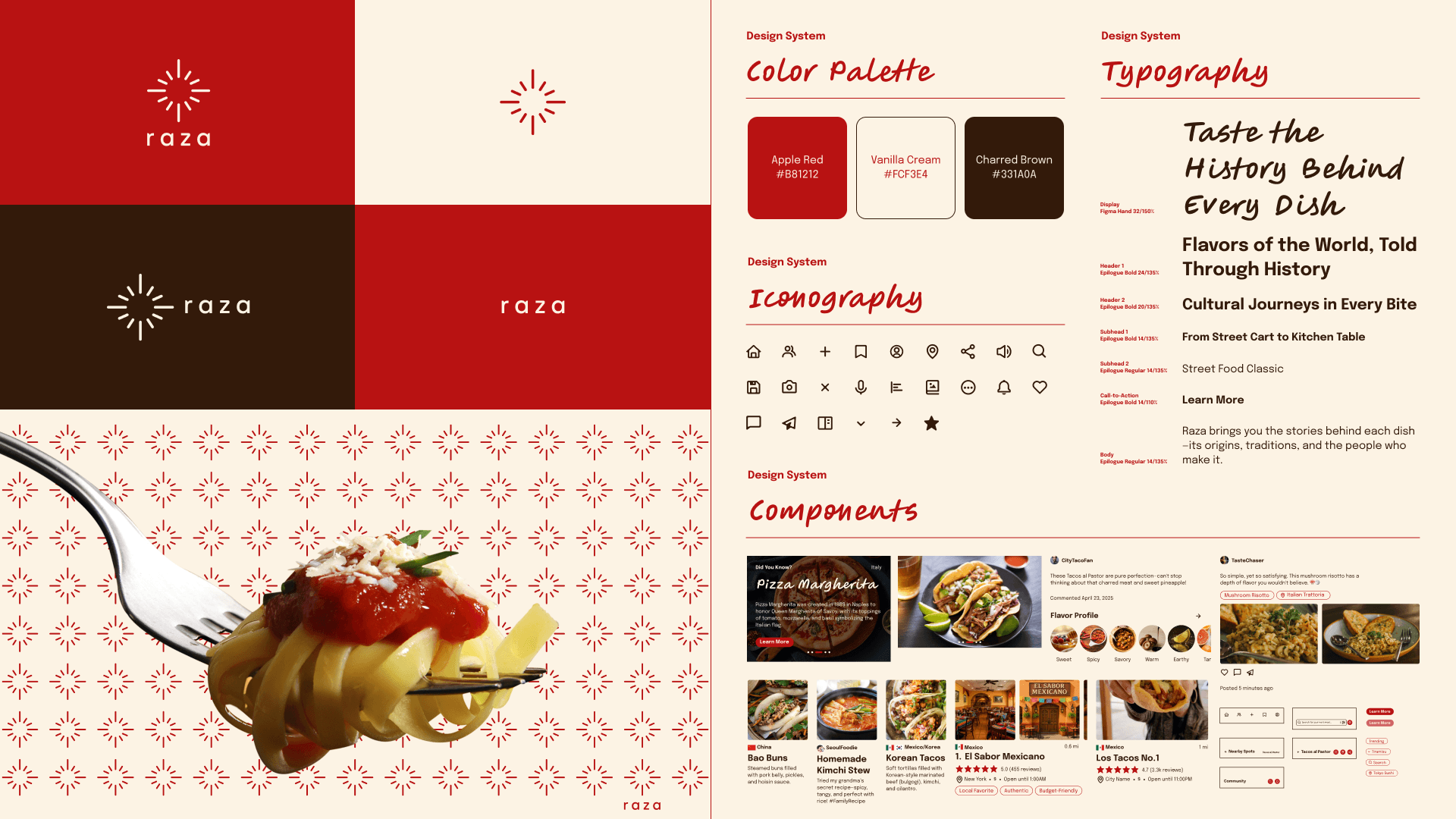
Raza’s interface focuses on effortless cultural discovery through a scrollable, story-driven experience.
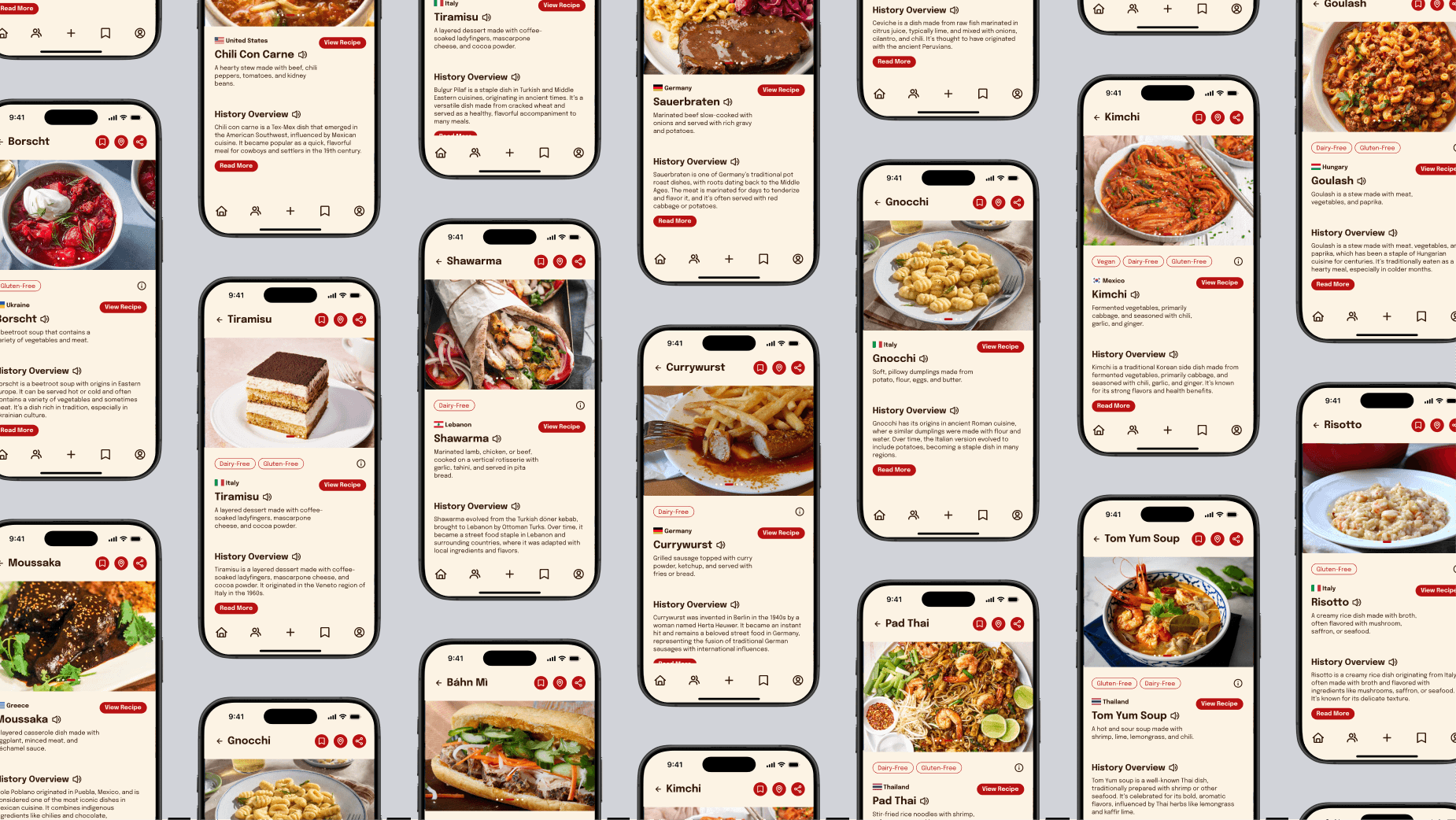
Dish Feed — A visually rich feed of dishes organized by country or category, with clear dietary labels (e.g., dairy-free, gluten-free).
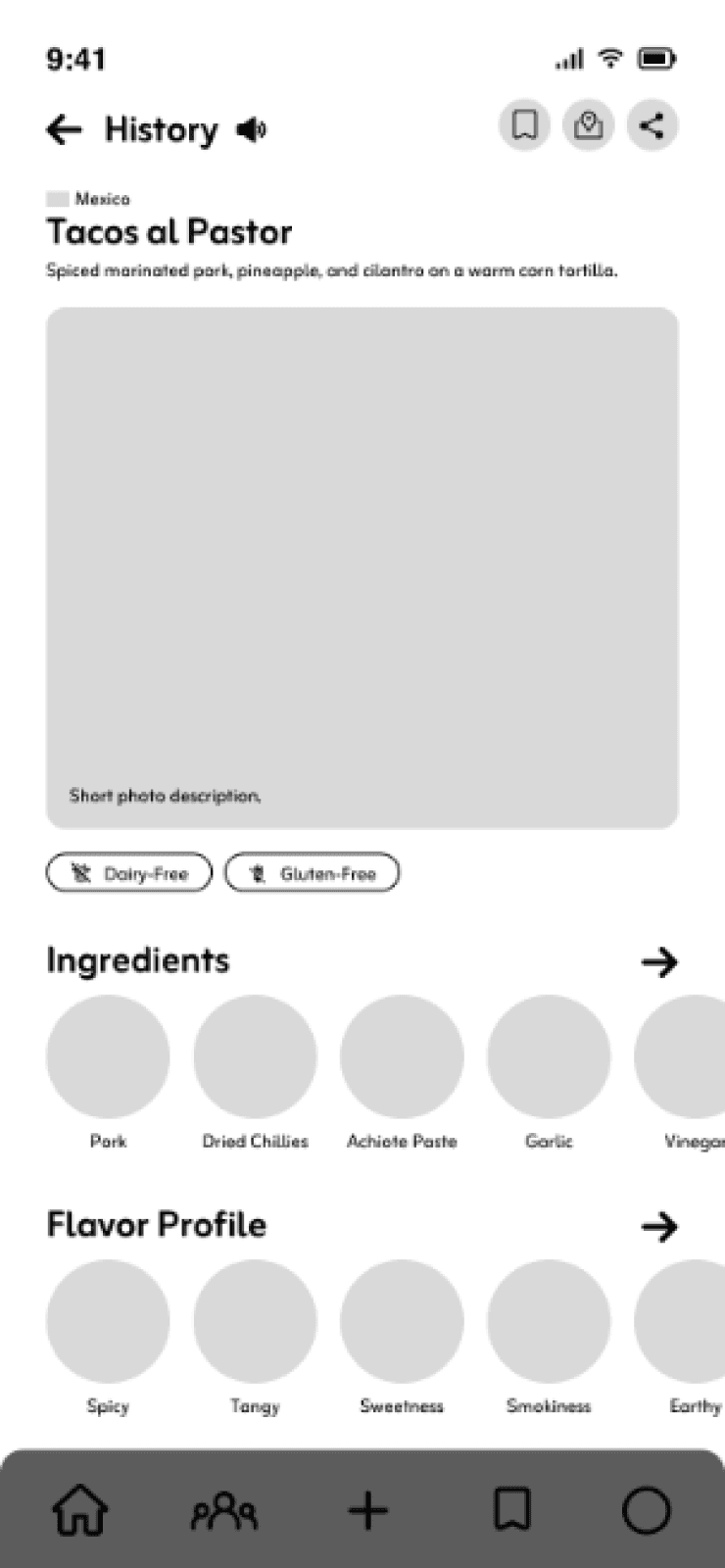
Dish Detail Page — When users tap a dish, they see an intro to its origin and can exp and into a full article with human imagery, cultural context, and historical depth.
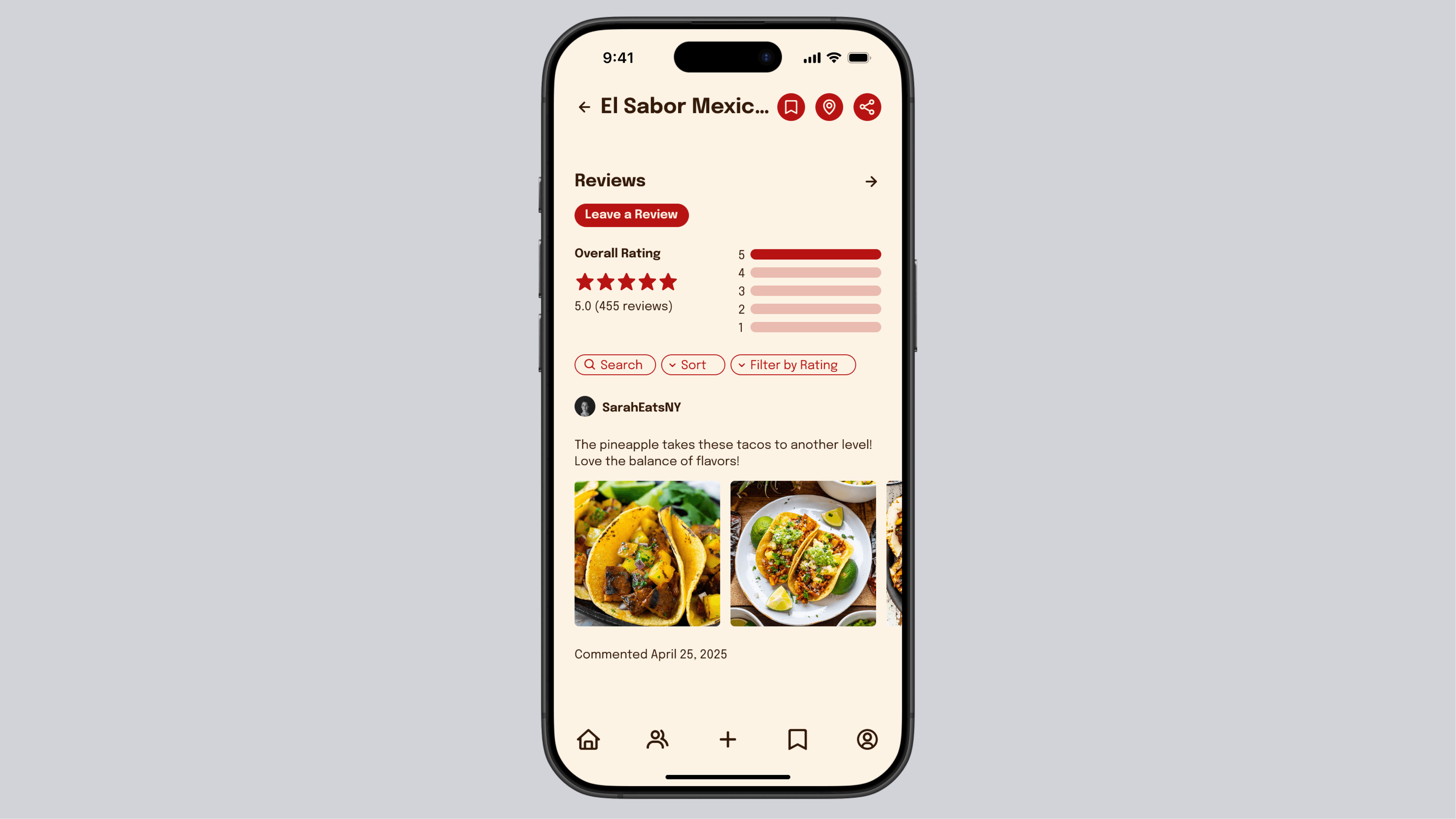
Action Options — Users can bookmark dishes or hop directly to related recipes — making exploration nonlinear and intuitive.
Ingredient Insights — Breakdowns of traditional ingredients, substitutions, and regional relevance to deepen understanding without overwhelming users.
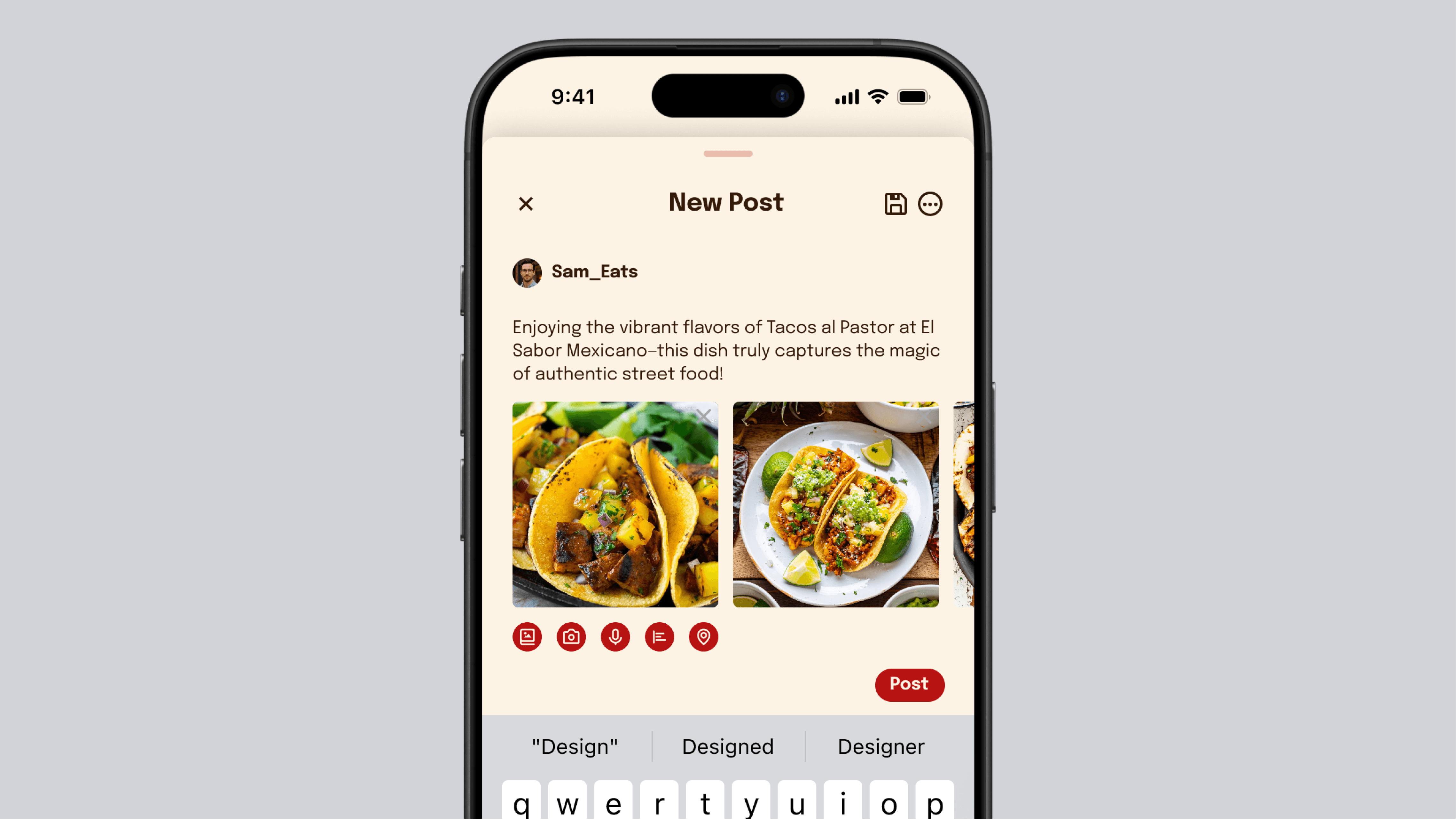
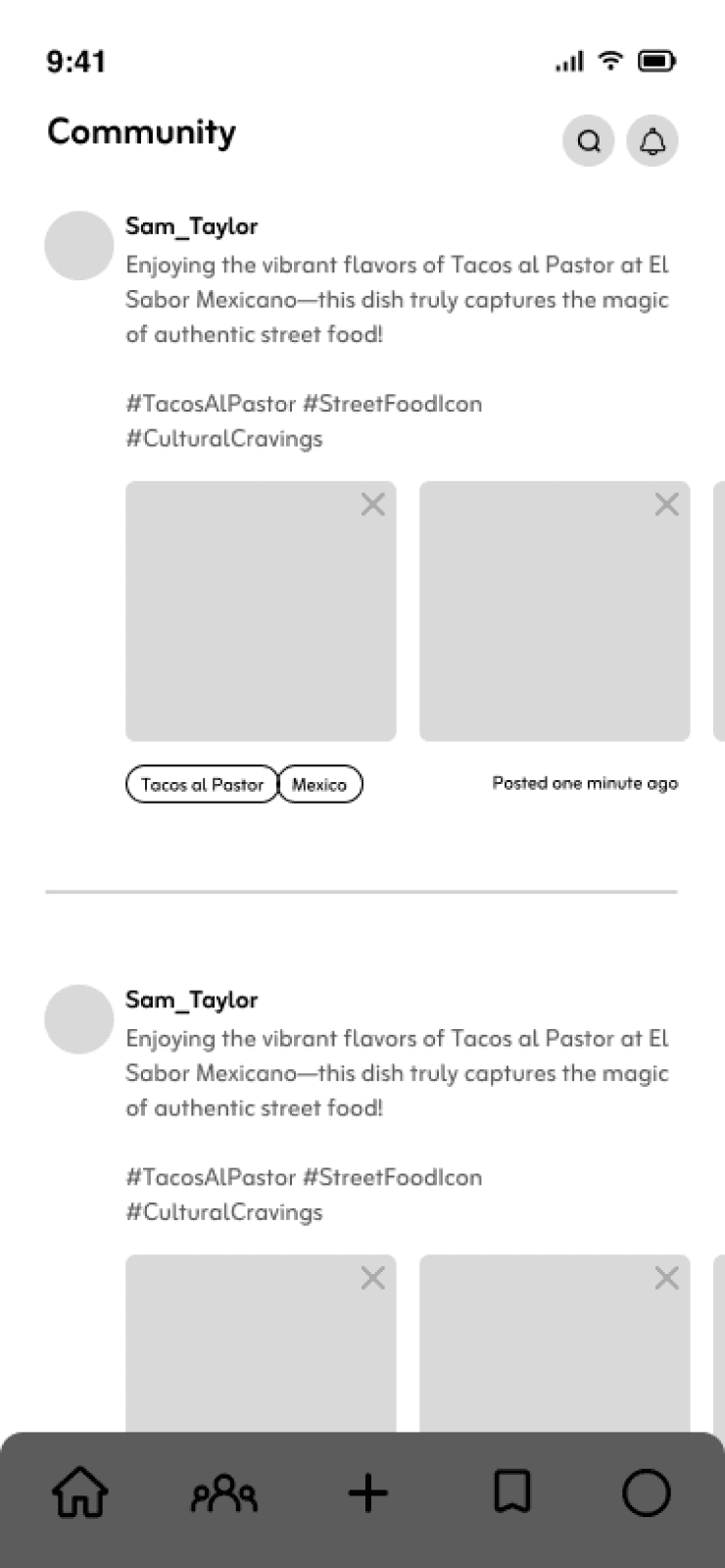
Community Tab — A dedicated space for sharing — users can post what they’re eating, browse others’ meals, and exchange recipes and stories, turning food discovery into a social, cultural exchange.
Across all pages, the design uses warmth, spacing, typography, and imagery to make cultural storytelling feel approachable and respectful.

reflection
Designing Raza from 0→1 was my first full end-to-end UX project — equal parts exciting and humbling. I had to learn how to balance curiosity with focus, stay flexible through iteration, and constantly remind myself that great design isn’t about features — it’s about clarity and connection.
1. stay flexible — design is never finished
Every round of feedback changed something, and that was a good thing. I learned to treat iteration as momentum, not rework. Each version got a little closer to what users actually needed.
2. don’t fall in love with early ideas
Some concepts sounded brilliant in theory but were difficult to execute — especially within a 14-week timeline. Letting go early helped me focus on what I could do well instead of stretching too thin. I learned that scope is a design decision too.
3. context is everything
Understanding the user’s mindset, emotions, and setting completely shifted my decisions. Whether someone is browsing during dinner or researching for a recipe, their environment shapes what “good UX” means.
4. Think long-term, not just MVP
I learned to design for scalability — components, content structures, and storytelling patterns that could grow over time.
special thanks to brian boyl! (ㅅ´ ˘ `)