publication design — 2026
faith in form
solo designer
timeline
14 weeks
deliverables
concept, typography, layout design, imagery, print production
introduction
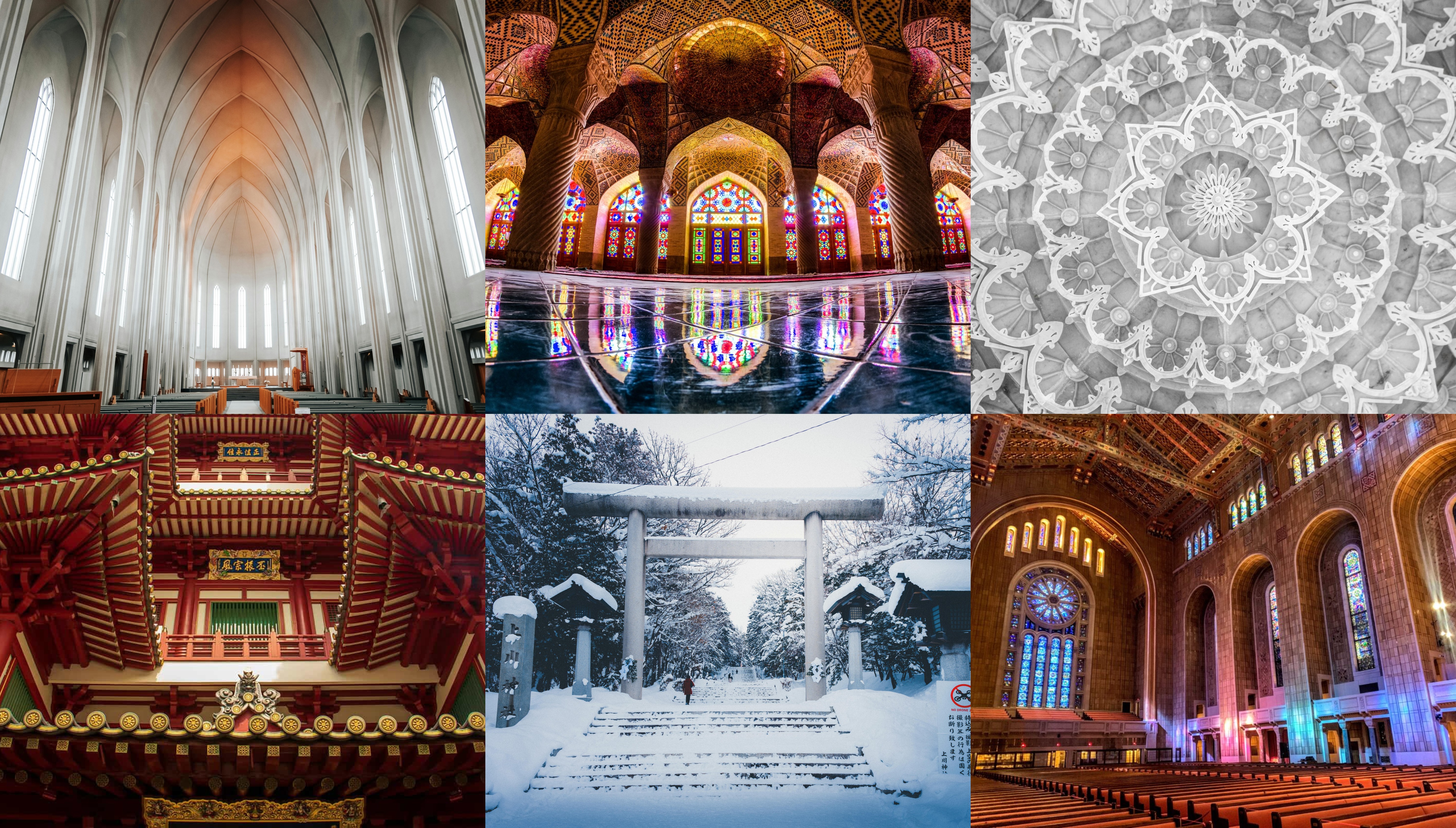
I designed a 224-page exhibition book exploring sacred architecture across six major religions—Christianity, Islam, Hinduism, Buddhism, Shinto, and Judaism—centered on place attachment and spiritual identity. I paired academic research with practitioner interviews, building a narrative that feels accessible, scholarly, and human.
background
I wasn't raised religious, and that absence sparked curiosity about how faith shapes sacred spaces. This project became a way to learn—not just about architecture, but about the beliefs and rituals embedded in each religion's relationship to place. I wanted to understand how a mosque orients toward Mecca, why a Hindu temple mimics the cosmos, what makes Jerusalem central to Jewish identity. The book let me approach these questions with rigor while inviting others into that same discovery.
insights
Sacred architecture isn't just about iconography—it's about creating environments that teach, transform, and anchor identity across generations. I learned that design elements like orientation, spatial progression, and sensory cues actively socialize believers into their faith. Place attachment isn't passive; it's cultivated through ritual, storytelling, and embodied experience. This shifted my understanding of architecture from static form to active participant in shaping consciousness and belonging.
the goal
how might we Design an exhibition book that explores how sacred architecture actively shapes religious identity and place attachment across six major world religions?

cover
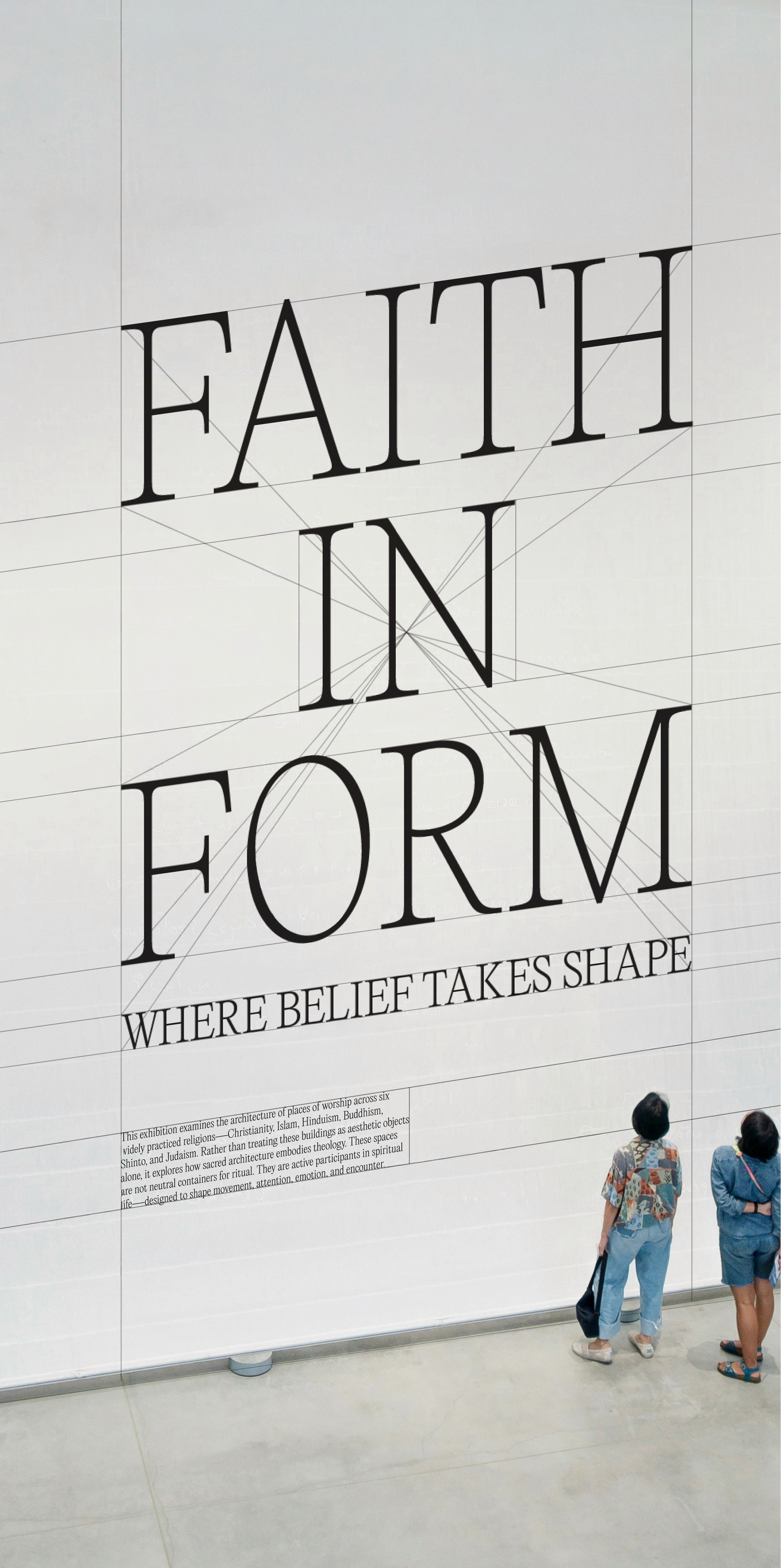
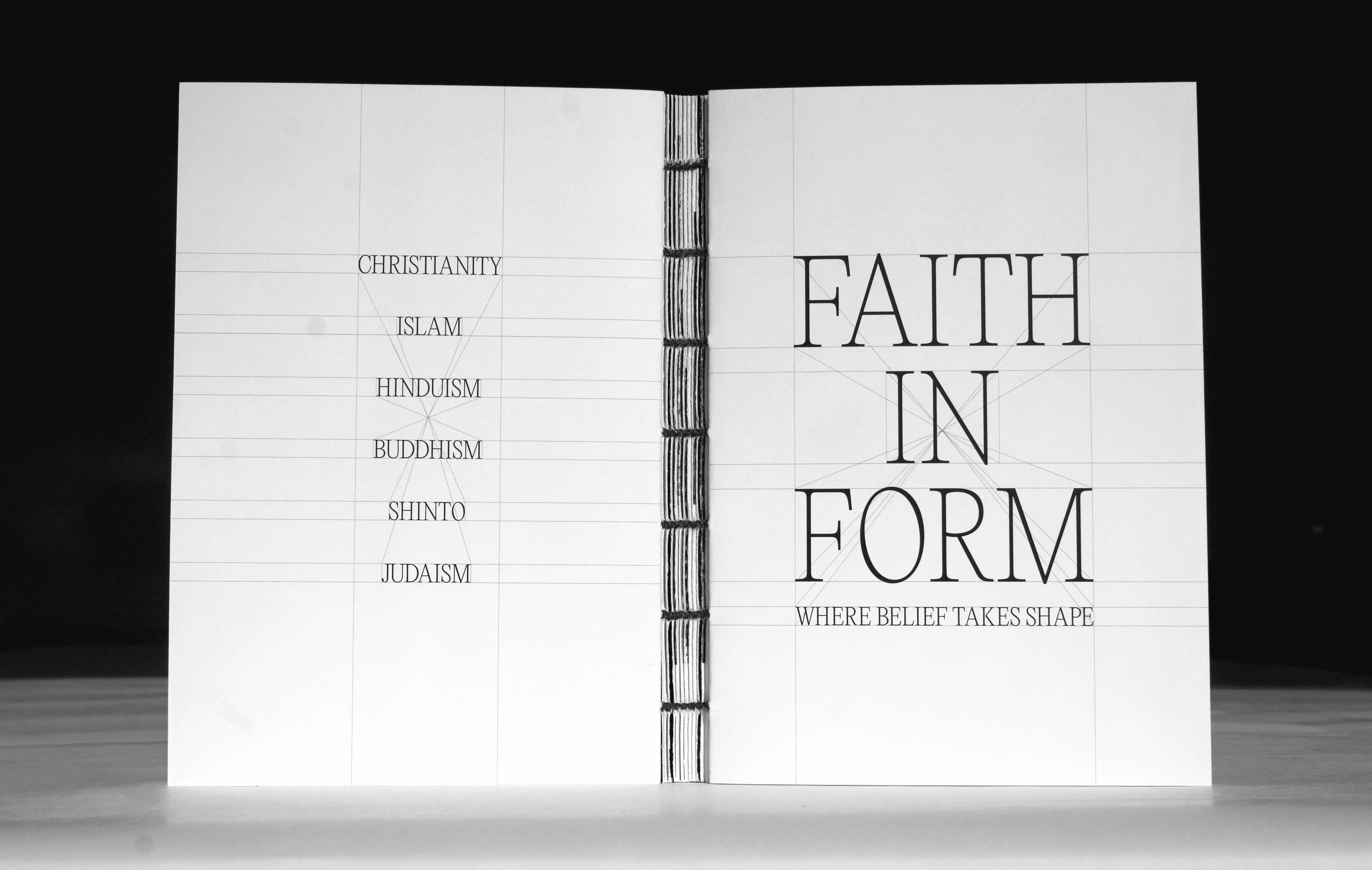
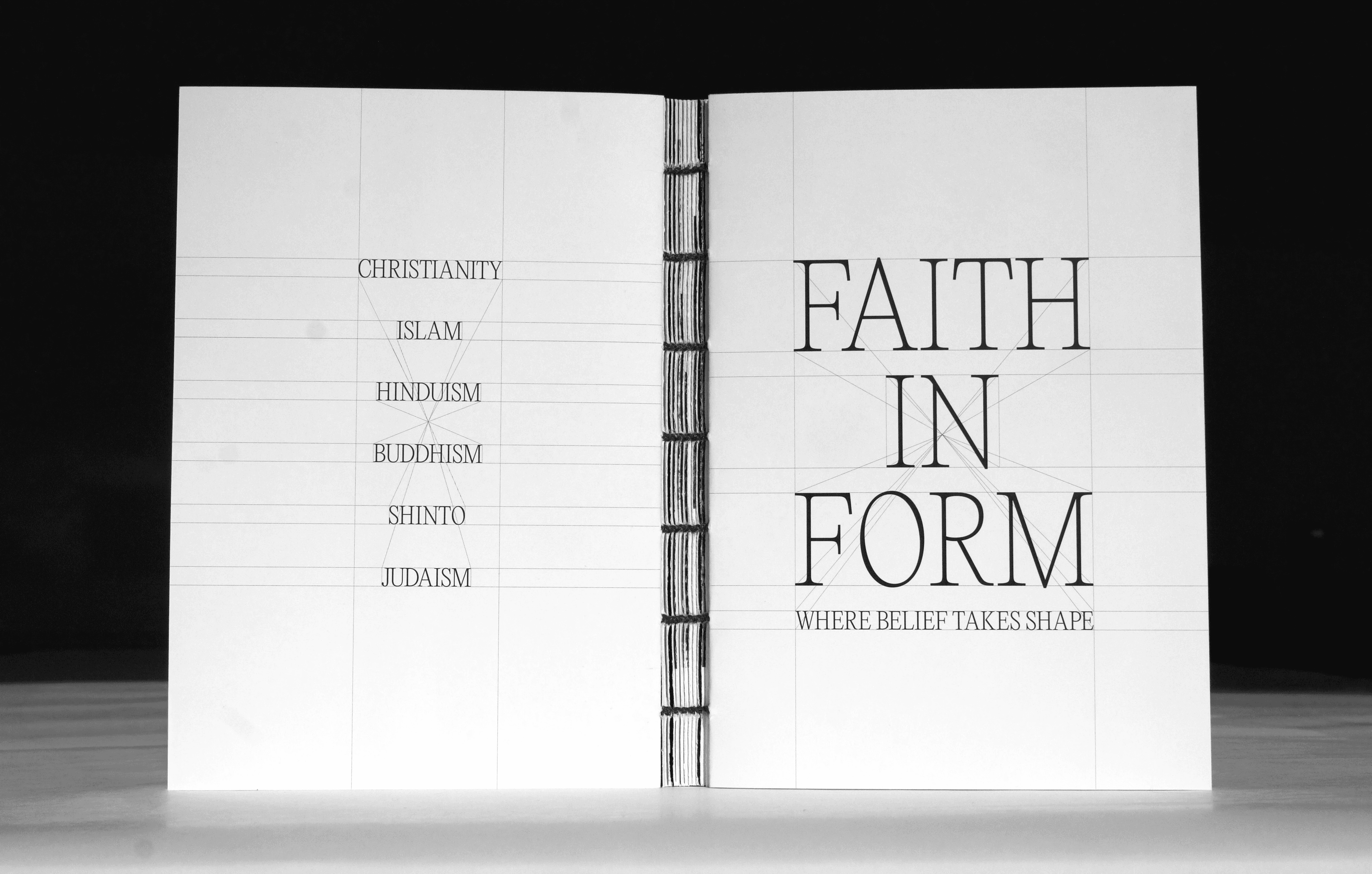
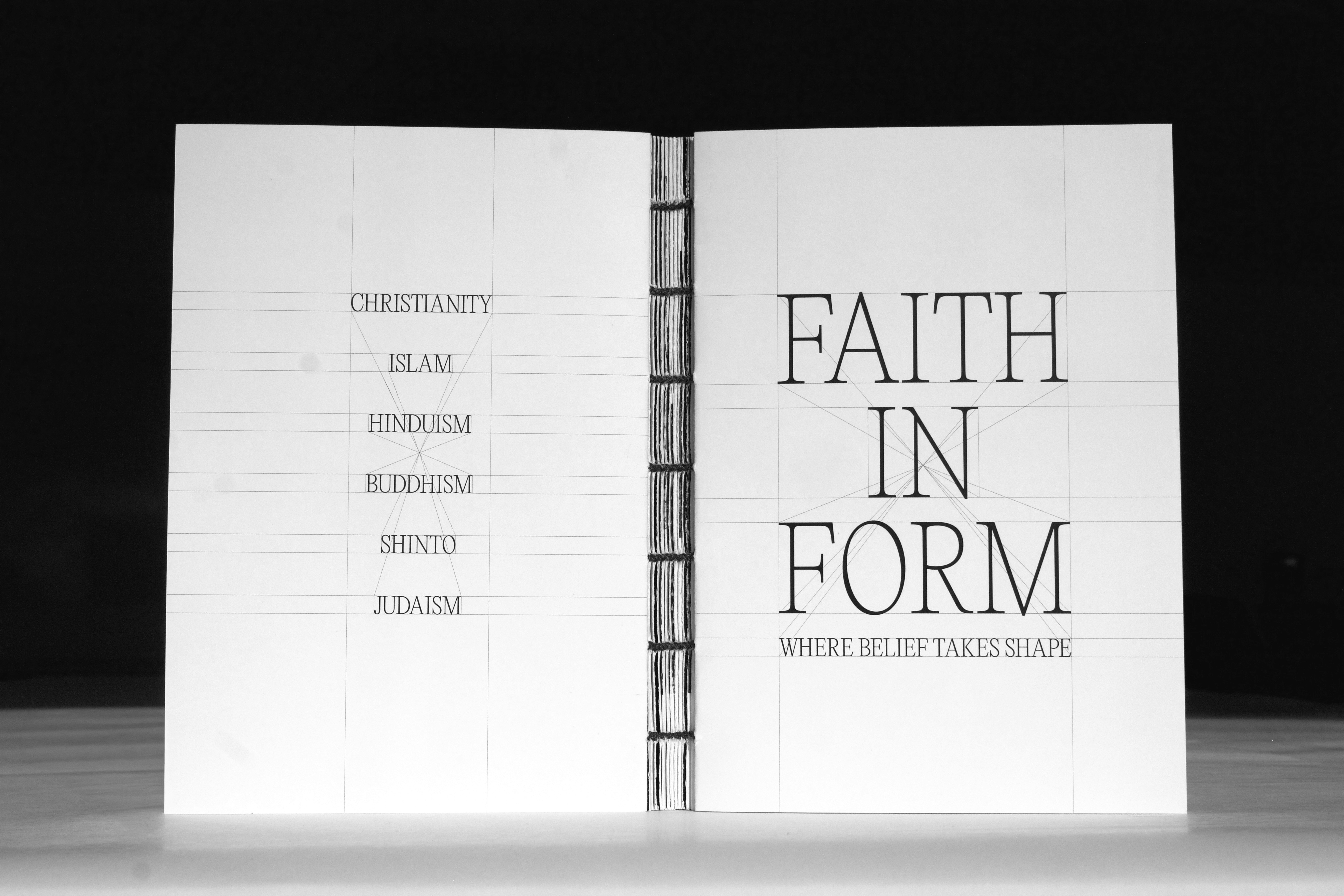
My cover pulls from the book's rule-based design system—rooted in traditional scripture layout but also referencing architectural line work and sketches. The rules structure the type while adding depth and mystery, inviting the viewer to open the book and discover what lies within.

interior
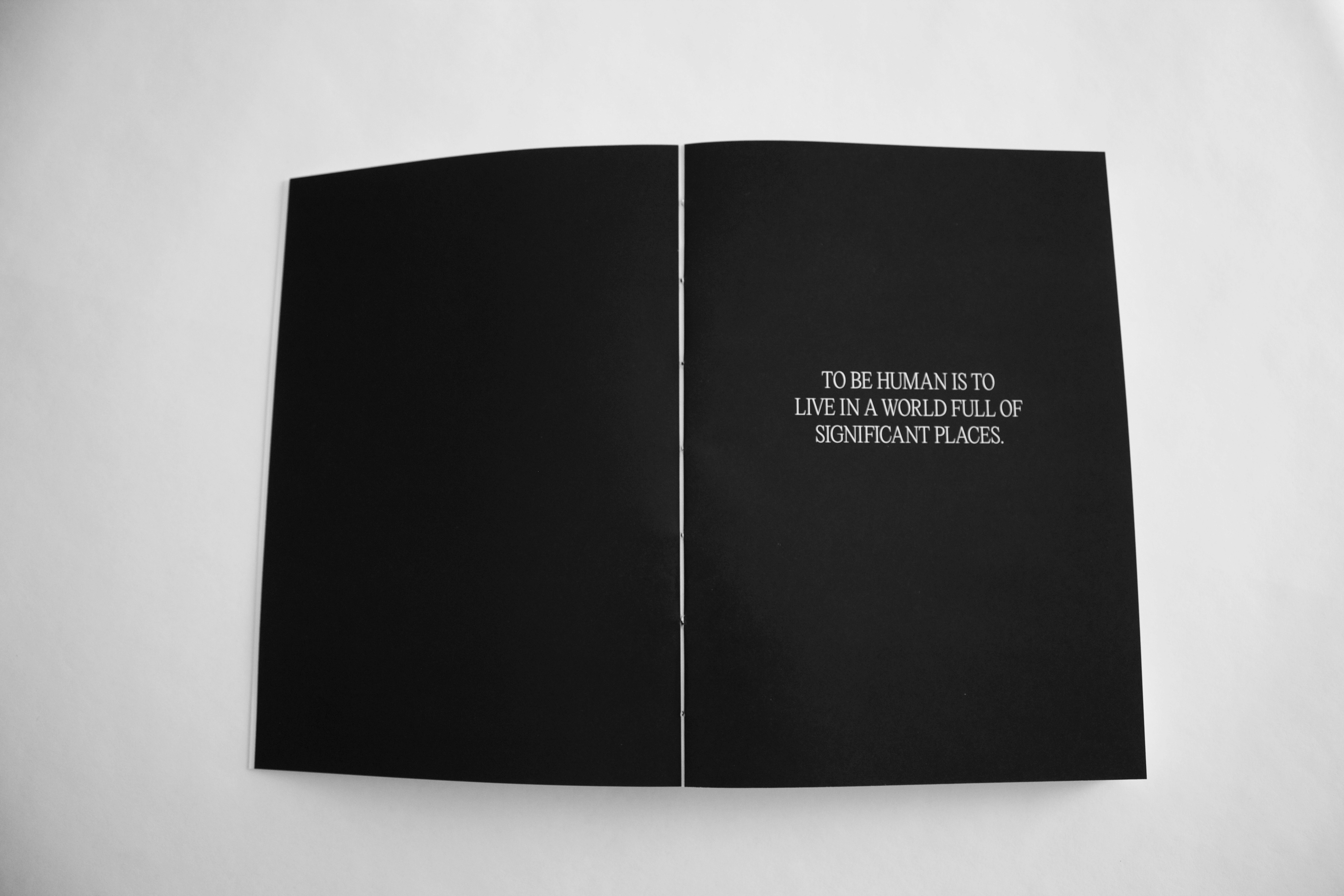
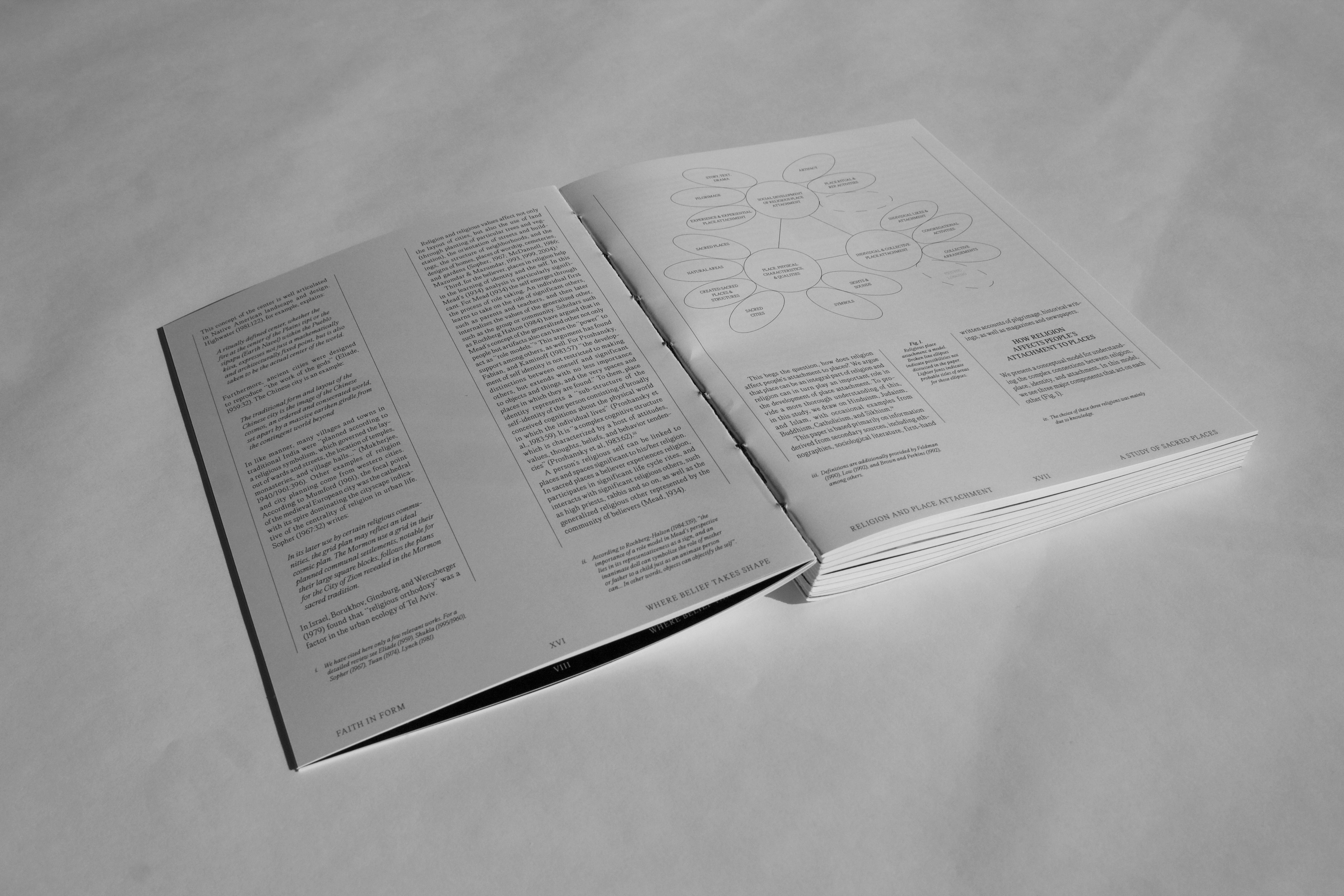
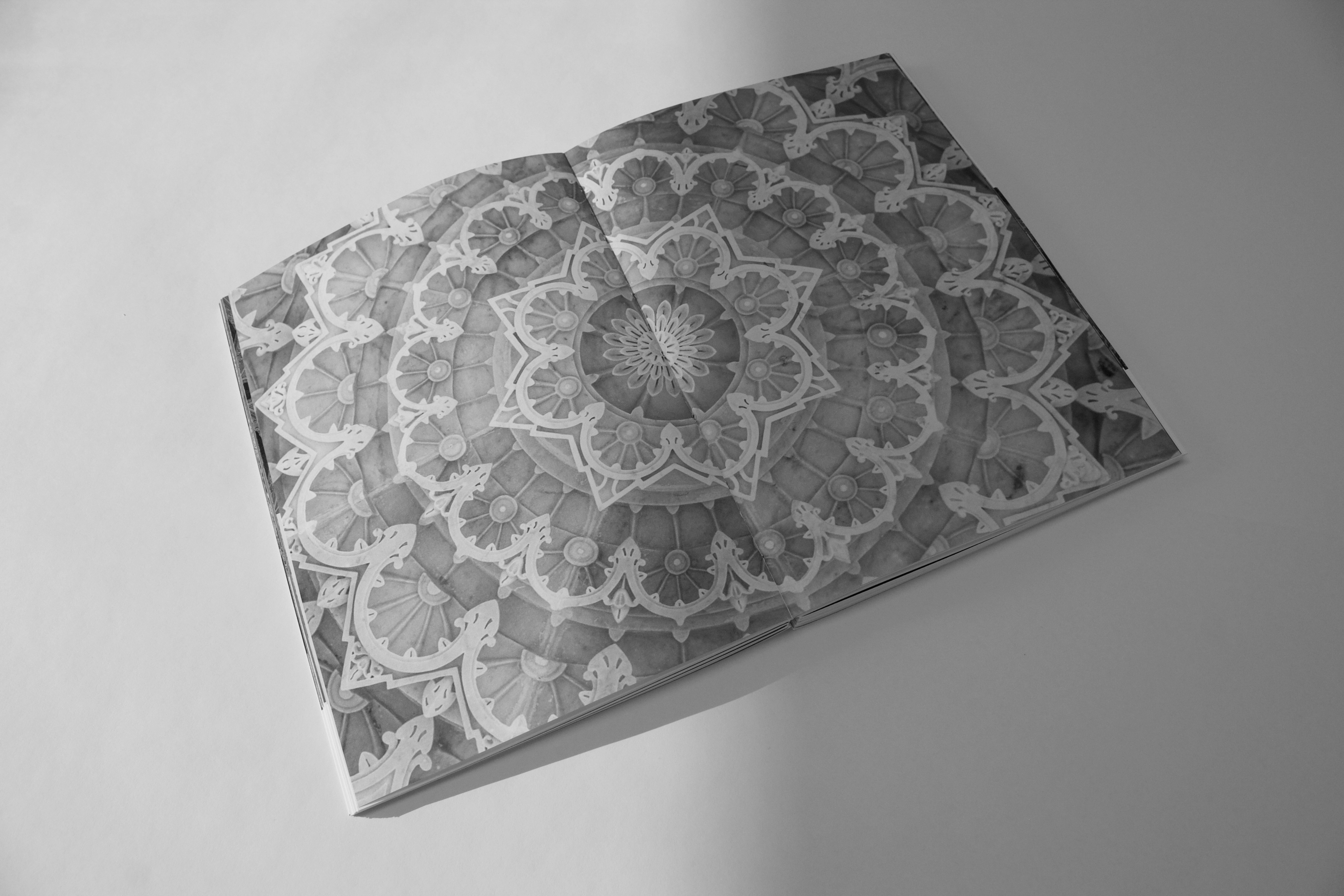
The visual system pulls from traditional scripture design—6x9 trim, justified serif typesetting, small dense body text, centered all-caps treatments, black and white imagery, and extensive use of rules. The rule system echoes both scriptural structure and architectural line work, creating a visual language that feels reverent and precise. Full-bleed images transition readers between religions, immersing them in each tradition's distinct visual universe. I bound the book using Coptic stitching, a technique originated by early Egyptian Christians in North Africa—a binding method that itself ties back to the book's exploration of sacred traditions.